When athletes get hurt, the first instinct is often to think recovery means rest. In the early stages of some injuries, rest absolutely has a place. But long-term recovery is rarely about doing nothing. It is about rebuilding what the injury took away.
That usually includes strength, balance, mobility, coordination, and confidence. Without those pieces, athletes may feel better on paper but still struggle when it is time to sprint, jump, cut, lift, or compete again.
This is where strength training becomes one of the most valuable tools in the rehab process. Done correctly, it helps athletes restore movement, protect healing tissues, and prepare for the physical demands of sport. It can also reduce the risk of re-injury by addressing weaknesses and compensations that often develop during time away from training.
Whether you are dealing with a sprained ankle, recovering from surgery, or trying to return after a nagging overuse issue, utilizing strength training for injury recovery is key in getting back safely and performing at a high level again.
Why Recovery Is More Than Rest
Rest can calm symptoms, but it does not automatically rebuild capacity.
After an injury, athletes commonly lose:
- Muscle strength
- Joint stability
- Explosive power
- Range of motion
- Endurance
- Confidence in movement
If someone returns to sport with pain reduced but those qualities still missing, performance usually drops and re-injury risk rises.
Recovery should be about restoring your ability to handle competition again, not just waiting for soreness to fade.
How Strength Training Supports Healing
Strength training helps recovery by gradually exposing the body to safe stress. That stress encourages adaptation when timed and programmed correctly.
Benefits of strength training in recovery include:
- Rebuilding muscle lost during inactivity
- Improving tendon and ligament load tolerance
- Restoring balance and coordination
- Supporting healthy movement patterns
- Improving confidence in the injured area
- Preparing the body for sport-specific demands
Research on return-to-play processes emphasizes progressive exercise and coordination between rehab and performance as key parts of holistic recovery.
Why Athletes Lose Strength Quickly After Injury
Even short breaks from training can lead to noticeable decline. A common sequence of events typically takes place when an athlete is hurt:
- Pain changes movement patterns
- Athletes avoid loading the injured side
- Muscles are not challenged normally
- Nervous system efficiency decreases
- Overall training volume drops
That is why many athletes say they feel “out of shape” or “weak” after injuries, even if the injury itself seems minor. One thing leads to the next, and eventually these events compound into a loss of strength.
The sooner an athlete can begin appropriate strength training for injury recovery under guidance, the easier it often is to rebuild.
When to Start Strength Training After an Injury
This depends on the injury type, severity, and medical guidance.
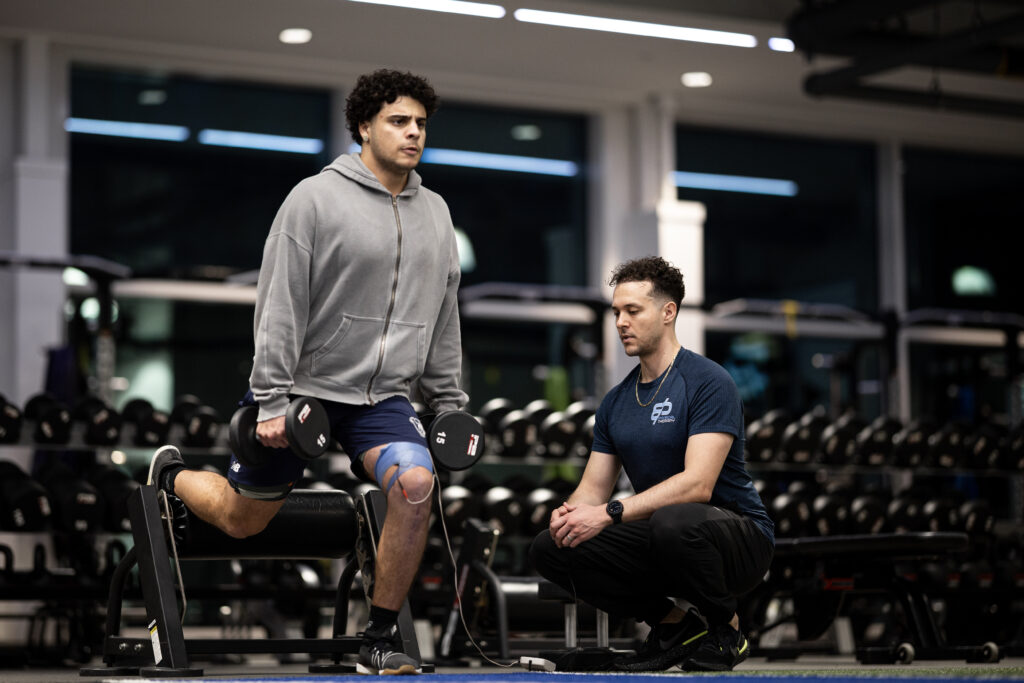
In many cases, strength work starts earlier than people expect. It may begin with:
- Isometric holds
- Bodyweight movements
- Band resistance
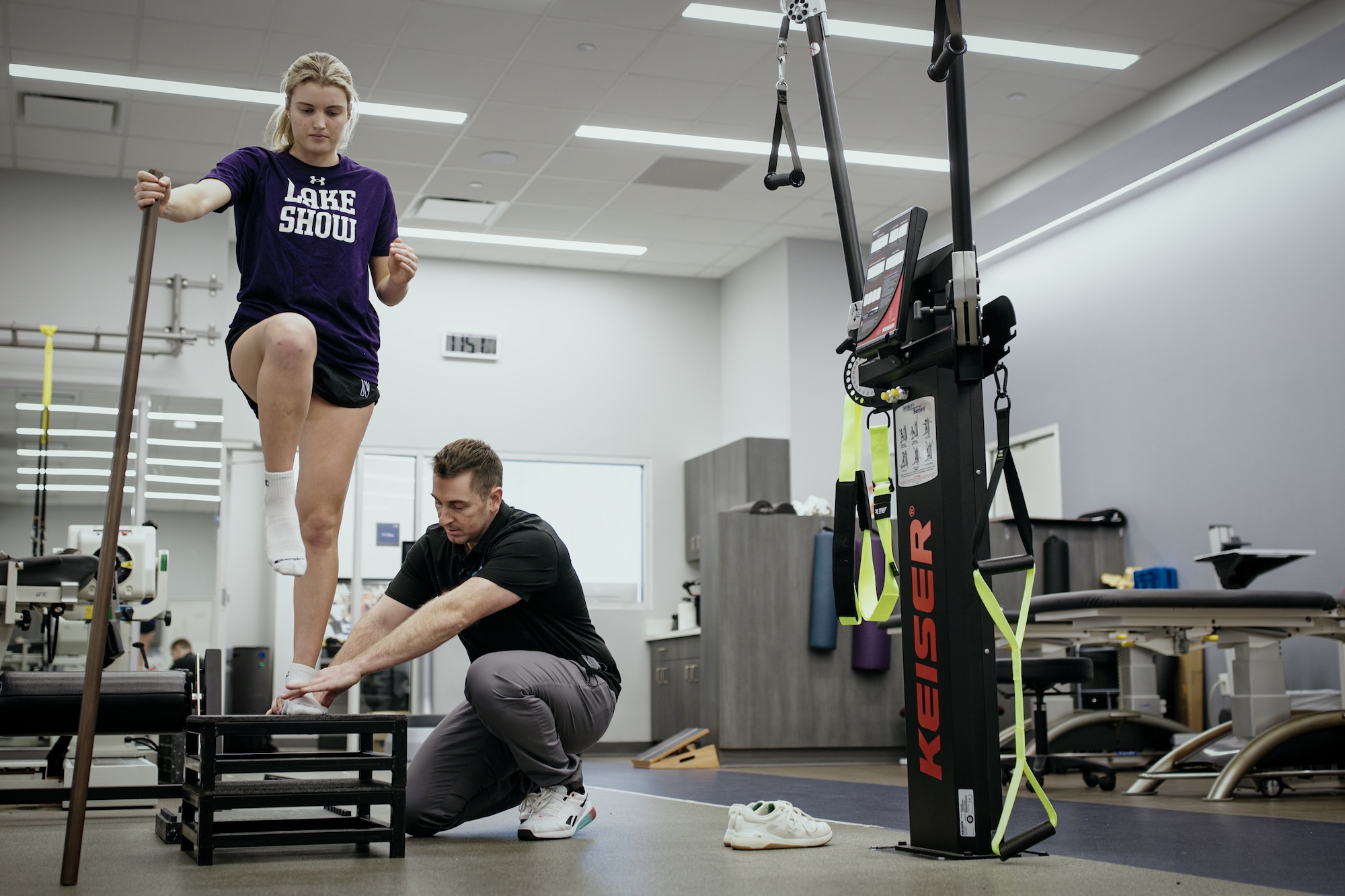
- Controlled balance work
- Core stability exercises
Later phases may progress into:
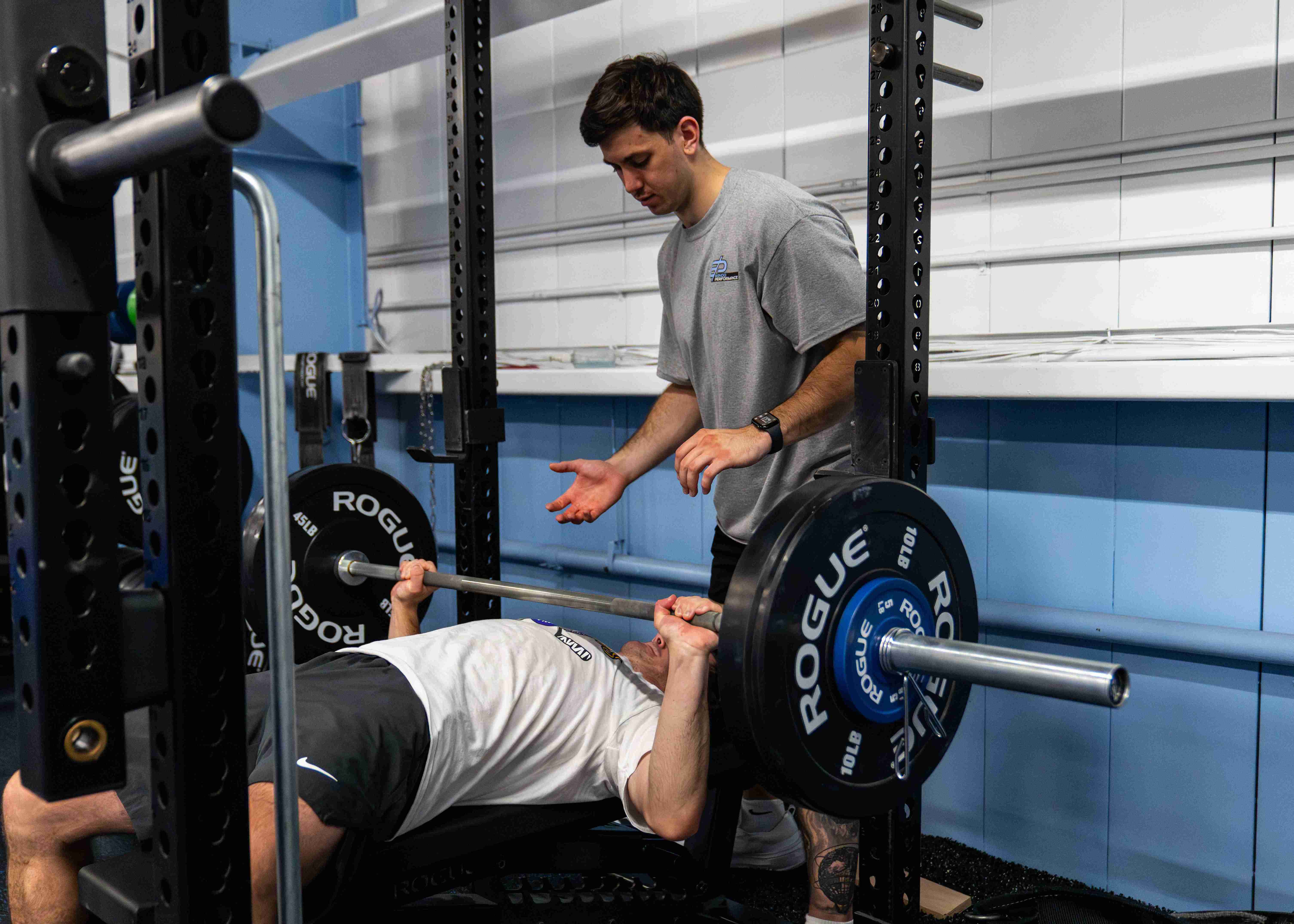
- Squats
- Deadlift variations
- Split squats
- Sled pushes
- Plyometrics
- Sprint and deceleration work
The key is progression. Too much too soon can create setbacks, but too little for too long can delay recovery.
What Strength Training Looks Like During Rehab
Rehab strength training should be targeted. Stacking random exercises in the pursuit of recovery is often just as harmful as doing nothing at all.
A strong rehabilitation program, inclusive of strength training, often includes three phases:
1. Restore Movement
Focus on mobility, pain-free ranges, stability, and basic control.
2. Rebuild Strength
Increase resistance and challenge the injured area gradually while restoring symmetry.
3. Return to Performance
Add speed, power, agility, impact tolerance, and sport-specific movement.
At Bando Performance, this process is designed to connect physical therapy principles with real athletic demands, helping athletes transition efficiently from the treatment table to the training floor.
If you are recovering from an injury, having a structured progression will make the process faster, safer, and less frustrating.
Returning to Sport Stronger Than Before
Some athletes treat injury recovery as a race to get cleared. The better mindset is to use recovery as an opportunity.
Many athletes come back stronger because rehab forces them to improve:
- Movement mechanics
- Single-leg control
- Core strength
- Weak side imbalances
- Warm-up habits
- Recovery discipline
In the right environment, rehab is not just about getting back. It can become a reset that improves long-term performance. The goal should always be to return to sport better than before an injury!
FAQs on Strength Training for Injury Recovery
Can strength training help injuries heal faster?
Strength training does not override tissue healing timelines, but it can improve the quality of recovery and help athletes regain strength and movement sooner.
Should I lift weights while injured?
It depends on the injury. Modified training is often possible and beneficial when supervised properly.
Is rest enough for sports injuries?
Rest may reduce symptoms early, but most athletes need progressive rehab to fully return to sport.
Can strength training prevent future injuries?
It can help by improving force tolerance, movement quality, and resilience when paired with smart programming. Recent reviews support strength training as an effective strategy for injury prevention and performance enhancement in team sports.
Final Thoughts
The connection between strength training and injury recovery is simple: athletes need more than healing. They need capacity.
Once pain decreases, the next step is rebuilding strength, movement, and confidence so the body is ready for real sport demands again.
If you are working back from an injury, Bando Performance can help guide that process with a rehab-to-performance approach built for athletes who want to return the right way.