
Dr. Taryn Chrysikos

Dr. Taryn Chrysikos
PT, DPT, CSCS•Certified Strength and Conditioning Specialist (CSCS)
Taryn earned her Bachelor of Science in Exercise Physiology with a minor in Nutritional Sciences before completing her Doctorate of Physical Therapy at the University of Massachusetts Lowell. She is a Certified Strength and Conditioning Specialist (CSCS) and Precision Nutrition Coach whose clinical approach combines rehabilitation, strength training, and nutrition to help clients achieve their goals both inside and outside the gym.
Education
- Doctorate of Physical Therapy, University of Massachusetts Lowell
- B.S. Exercise Physiology, minor in Nutritional Sciences
Certifications
- Certified Strength and Conditioning Specialist (CSCS)
- Precision Nutrition Coach
Expertise
With a background in both physical therapy and performance training, Taryn specializes in helping athletes and active individuals navigate the transition from injury rehabilitation back to high-level training. She believes rehabilitation should not simply return clients to baseline, but prepare them to confidently meet the demands of their sport, training, and everyday life.
Whether you're recovering from an injury, preparing to return to sport, or looking to optimize performance, Taryn develops individualized treatment and training plans designed to meet you where you are and help you reach the next level.
- Dry needling
- Manual therapy / soft tissue work
- Active Release Technique (ART)
- Instrument-assisted soft tissue mobilization
- Joint manipulation and mobilization
- Blood flow restriction training
- Cupping
- Biomechanical / movement assessment
- Strength & conditioning
- Return-to-sport testing
- Performance-based rehabilitation
- Targeted exercise programs
What I treat
On Instagram
@phlex_fitness
The truth about that constant hip tightness 🤫👇 Stretching feels incredible in the moment, but if that stubborn “tight” sensation keeps coming back a few hours later, you aren’t actually solving the problem. Your hip flexors aren’t structurally short. They are weak. When a muscle lacks the physical strength to manage a joint’s range of motion, your nervous system steps in with a protective guarding reflex. It locks the muscle down to create artificial stability, which your brain registers as chronic tightness. The real fix? Stop passively pulling on an already aggravated muscle. Give your nervous system a reason to let that tension go by building true capacity and motor control. What you’re seeing in this video: a hip flexor plank Great at isolating the hip flexor dynamically, but you can also perform this isometric by holding the top position, driving your knee into the bench Give this one a try and relax with the stretching, I bet you start to feel better
Watch video
Ditch the standard diet mindset. ❌ When most people hear the word “diet,” they immediately think about restriction, misery, and surviving on air and celery sticks. But starving your body doesn’t build a strong physique, and it definitely doesn’t help your long-term health. If you want to actually see results, sustain your energy, and feel good in your own skin, here is what you need to focus on instead: 1️⃣ Eating enough: Constantly crashing your calories destroys your metabolism, leaves you exhausted, and ruins your workouts. Fuel your body. 2️⃣ Quality protein: Protein isn’t just a number on a label. Real food like chicken breast will always beat highly processed protein chips. 3️⃣ The right sugars: Stop avoiding fruit! The enemy isn’t natural sugar; it’s the added, refined sugars found in ultra-processed foods. 4️⃣ More fiber: Fiber deserves the same hype we give to protein. It regulates blood sugar, heals your gut, and aids your digestion. Don’t skip it. 5️⃣ Macronutrient balance: Carbs give you energy. Fats regulate your hormones. Protein repairs your tissues. None of them are the enemy—eating an excessive amount of total calories is what causes fat gain. Stop overcomplicating nutrition. Focus on whole, real foods, eat to fuel your lifestyle, and give your body the balance it deserves. 💪 What’s one change you’re making to your nutrition this week? Let me know below! 👇
View post
Are you leaving chest gains on the table? 🪵 To build a truly complete chest, you can’t just press straight out in front of you. The pecs are divided into three distinct regions, and their fibers run in completely different directions. If you want maximum growth, your training has to match that anatomy: • The Upper (Clavicular): Needs an upward and inward scooping path to line up with fibers running down from your collarbone. • The Mid (Sternocostal): Responds best to pressing straight out across your coast. • The Lower (Abdominal): Requires a downward and inward sweep to target the fibers running up from your lower ribs. Why take it one arm at a time? 🦾 While bilateral presses are great for moving heavy weight, switching to unilateral (single-arm) variations unlocks a whole new level of hypertrophy. By focusing on one side at a time, you can open up your torso and access a deeper stretch at the bottom of the movement. That increased range of motion puts the muscle under intense mechanical tension where it is most vulnerable and primed for growth. Even better, working unilaterally lets you bring your arm completely across the midline of your body, creating a devastating peak contraction that you simply can’t get when two hands are fixed on a barbell. More stretch, better range of motion, and a harder squeeze mean more opportunities for real tissue growth. Drop your favorite single-arm chest exercise in the comments below! 👇
Watch video
I put out breakdowns like this every week to help cut through the oversimplified fitness rules and give you real clarity on how your body actually functions. 🧠✨ If you want to build true tissue capacity and finally train without fear, make sure you’re following along. 📌 Save this post so you can look back at these rules before your next workout, and share it with someone who is currently stuck in the stretching or rest trap!
View post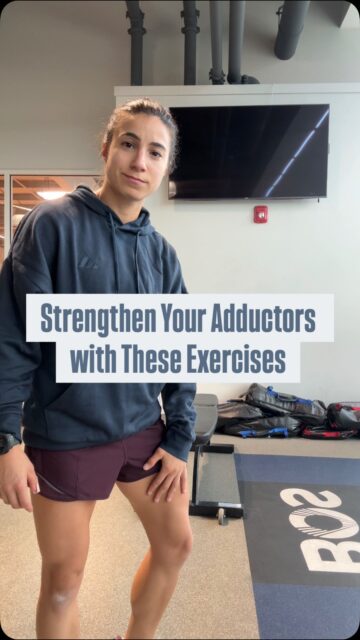
The adductors are a commonly ignored area, but you can’t ignore them! While they often get left out of the conversation in favor of the glutes and quads, your adductors are the ultimate secret weapon for total lower body performance and pelvic stability. Here is why keeping them strong changes the game: ✨ Dynamic Pelvic Stability: Your adductors act like a secondary core for your lower body. They work in tandem with your pelvis and hip flexors to keep you stable during single-leg movements, walks, and heavy lifts. ✨ Cross-Body Power Transfer: Strong adductors play a massive role in shifting weight and transferring power from the ground up, helping you move smoothly and efficiently in every plane of motion. ✨ Built-In Joint Protection: Strengthening the adduction patterns builds resilient hips and groins, keeping you balanced, moving well, and feeling great through every workout. If you’re only training in a straight line, you’re leaving a massive piece of the stability puzzle on the table. Drop a 🦾 below if you’re adding inner-thigh work to your routine this week!
Watch video
The best way to get better at pull ups? Do pull ups! The number one way to get better at the thing is to do the thing No need to overkill it and do them all the time, but consistently practicing the movement and/or skill you want to get better at will go a long way When you’re not doing them? Strengthen the prime movers in other ways- lats, traps, etc. through compound and accessory lifts Need help programming around this one goal of yours? Let’s make a program that is right for you! DM me “PULL UPS” to get started
Watch videoBando Physical Therapy — Wellesley
900 Worcester Street, Suite 201
Wellesley, MA 02482
Mon–Fri 8 AM–7 PM · Sat 8 AM–1 PM