It happens more often than most people realize.
An athlete gets hurt. They go through physical therapy, do the exercises, follow the plan. After a period of work, they start to feel better and they discontinue rehab after pain goes away.
They abandon the plan and go back to competition.
And then something goes wrong. The same area flares up. A new injury develops nearby. Performance feels off in ways that are hard to explain. Or worst of all, the original injury comes back more seriously than before.
This pattern is one of the most common — and most preventable — problems in sports injury recovery. The reason it keeps happening comes down to a misunderstanding that almost every injured athlete carries: the belief that when pain goes away, recovery is complete.
Pain Relief and Recovery Are Two Different Things
When an injury occurs, the body immediately begins protecting itself. Swelling, pain, and limited movement are all part of that protective response. As healing progresses, those signals quiet down. Inflammation decreases. Discomfort fades. Movement becomes easier.
This is the first phase of recovery. It is important. But it is not the finish line.
What happens during this early healing phase is primarily tissue repair. The body patches the damaged structure — whether that’s a muscle, tendon, ligament, or bone — well enough to reduce pain signals. But the repaired tissue is not the same as fully restored tissue. And the surrounding structures that were affected by the injury — the muscles that weakened, the movement patterns that shifted, the neuromuscular connections that became less efficient — do not automatically recover just because pain decreases.
This is the gap that catches athletes off guard.
An athlete can feel 80 or 90 percent better and still be operating with meaningful deficits in strength, stability, coordination, and movement quality. Those deficits may not be noticeable during daily life or light activity. They become very noticeable when an athlete sprints at full speed, cuts sharply, absorbs a collision, or lands from a jump.
Full-speed competition exposes what everyday movement hides.
What Gets Left Behind When Rehab Ends Too Early
When athletes stop structured rehab at the point of pain relief, several important things are typically left unaddressed.
Strength deficits on the injured side.
Muscle strength decreases rapidly after injury. Even a few weeks of reduced loading can create a meaningful gap between the injured side and the healthy side. That asymmetry does not correct itself through sport participation alone. It requires intentional, progressive loading to rebuild.
Neuromuscular control.
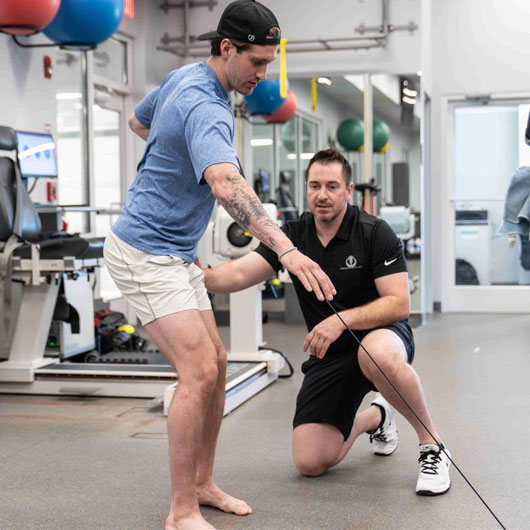
Injuries disrupt the communication between the nervous system and the muscles around affected joints. Athletes may notice this as instability, a lack of trust in the joint, or slower reaction times during dynamic movement. Rebuilding this connection requires specific training that goes well beyond pain management.
Power and explosiveness.
Strength and power are related but not the same. An athlete may rebuild adequate strength for daily function while still lacking the explosive capacity needed for sprinting, jumping, and rapid change of direction. Power development requires higher-intensity training that early-stage rehab does not include.
Compensation patterns.
During injury, the body finds workarounds. Athletes unconsciously shift load to other muscles and joints to protect the injured area. These compensations become habitual over time. Returning to sport without addressing them means competing with movement patterns that put abnormal stress on structures that were not designed to carry that load.
Mental confidence.
This one is easy to overlook. Athletes can be structurally sound but still hesitate in the moments that matter most. Whether that be a contested landing, a collision, or an aggressive cut into space on the field. That hesitation is not weakness. It is the body’s protective response when trust has not been rebuilt through progressive, demanding movement. Confidence comes from exposure, not from the absence of pain.
Why Athletes Stop Rehab After Pain Goes Away
Understanding why this happens is just as important as understanding why it is a problem.
For most athletes, pain is the primary signal they use to measure recovery. When it stops, the logical conclusion is that the problem is solved. No one explained that the pain-free milestone is just the first checkpoint, not the destination.
There is also pressure from every direction. Teammates are practicing. Coaches want updates. The season is moving forward. Recruiting windows feel time-sensitive. Parents may be anxious about missed time. Athletes are wired to push through discomfort, and once the discomfort is gone, the motivation to continue structured rehab often drops sharply.
Cost and scheduling are real factors too. Continuing physical therapy beyond the point of pain relief requires time, money, and ongoing commitment that can be hard to sustain, especially when an athlete starts to feel better.
And sometimes, no one clearly told the athlete what being truly ready to return actually looks like. They were cleared based on symptom resolution, not performance benchmarks. When that is the measure, pain going away becomes the finish line by default.
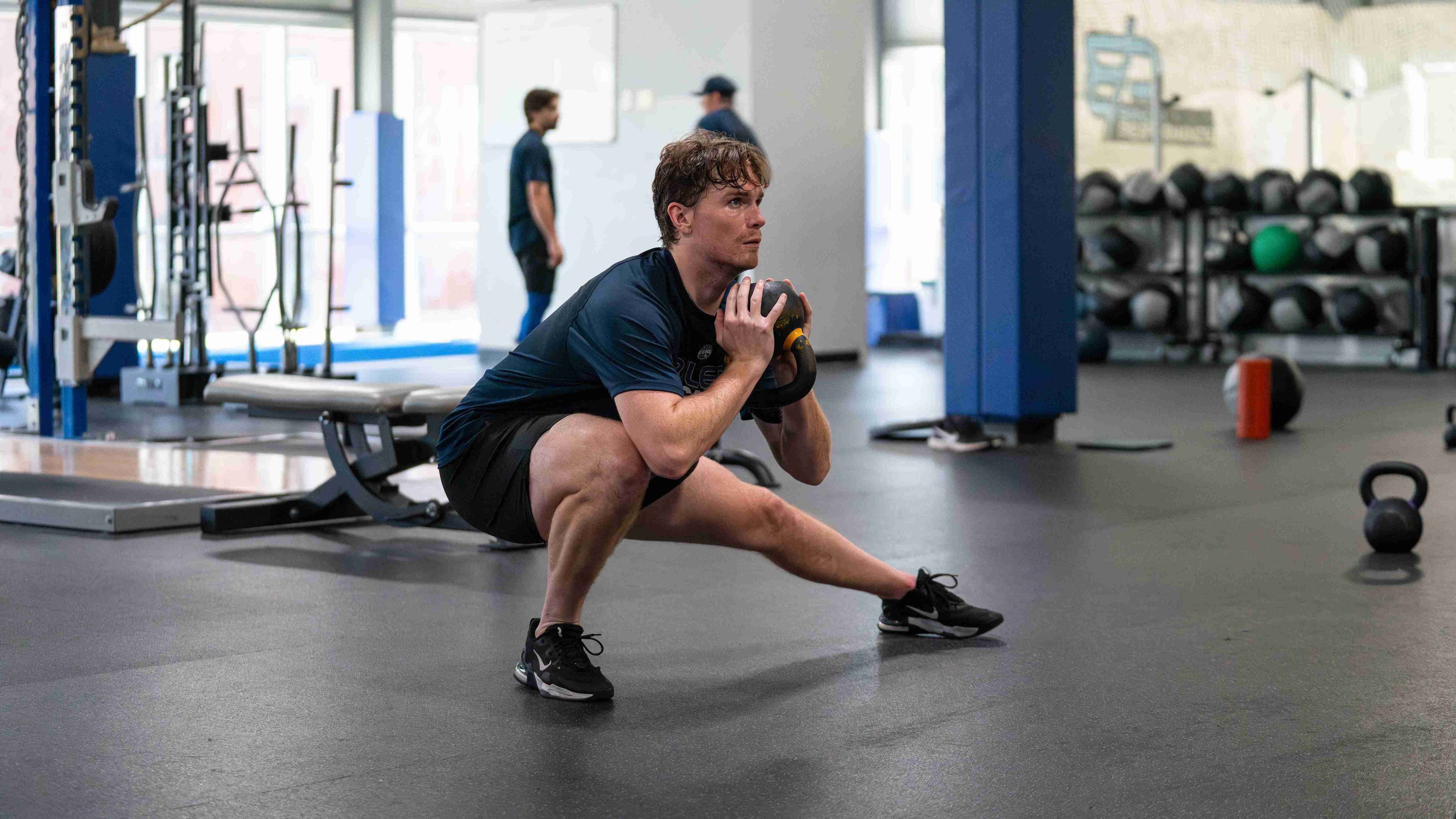
What Return-to-Sport Readiness Actually Looks Like
True readiness for return to sport is not about how the injury feels. It is about how the body performs.
Athletes who are genuinely ready to return can generally demonstrate:
- Strength levels on the injured side that are close to symmetrical with the uninjured side
- Full or near-full range of motion at an affected joint
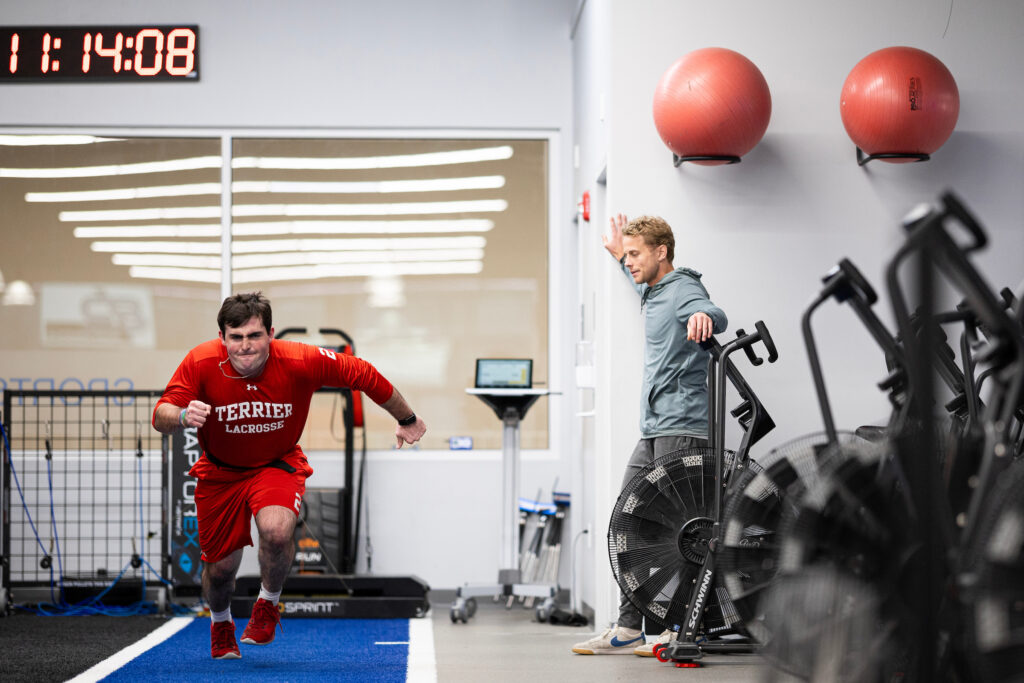
- The ability to perform sport-specific movements like sprinting, cutting, jumping, decelerating without pain, hesitation, or compensated mechanics
- Passing functional benchmarks appropriate to their sport and position
- Confidence in reactive and unpredictable movements
These are not arbitrary standards. They reflect what a sport actually demands from the body. An athlete who cannot meet these benchmarks in a controlled setting is not ready for the uncontrolled environment of competition, regardless of their pain level.
The path from pain-free to performance-ready is often shorter than athletes fear, but it requires intentional work that does not happen on its own.
The Re-Injury Problem
Returning to sport before the body is truly ready is one of the most reliable predictors of re-injury. This is not bad luck. It is mechanics.
When an athlete returns with unresolved strength deficits, movement compensations, or reduced neuromuscular control, they are placing demands on a system that is not yet equipped to handle them. The injured area may hold up initially. But the surrounding structures — and sometimes the original injury site itself — are absorbing forces they were not designed to manage.
Over time, that adds up. What looks like a new injury is often the downstream consequence of an incomplete recovery from the original one.
Re-injury also tends to be more serious than the first incident. Recovery takes longer, the psychological toll is higher, and the window for return is often narrower. Avoiding that outcome is worth the investment of finishing the recovery process the right way.
The Phase Between Pain-Free and Game-Ready
There is a stage of recovery that does not always get the attention it deserves: the period after pain resolves but before an athlete is prepared for full competition.
This is not traditional rehab. It is not rest. It is progressive return-to-performance training. Structured work that rebuilds athletic capacity in a way that pain management alone never will.
This phase typically includes:
- Progressive strength training with increasing load and complexity
- Power development through plyometrics and explosive movement
- Speed and agility work reintroduced in a controlled, progressive sequence
- Deceleration and change-of-direction mechanics
- Sport-specific drills that mirror the actual demands of competition
- Conditioning work to restore the endurance the injury period depleted
The goal of this phase is not just to prepare the injured area. It is to prepare the entire athlete, both their body and mind, for what their sport will ask of them on the first day back.
This is exactly the gap that too many athletes skip, and exactly where the most preventable setbacks occur.
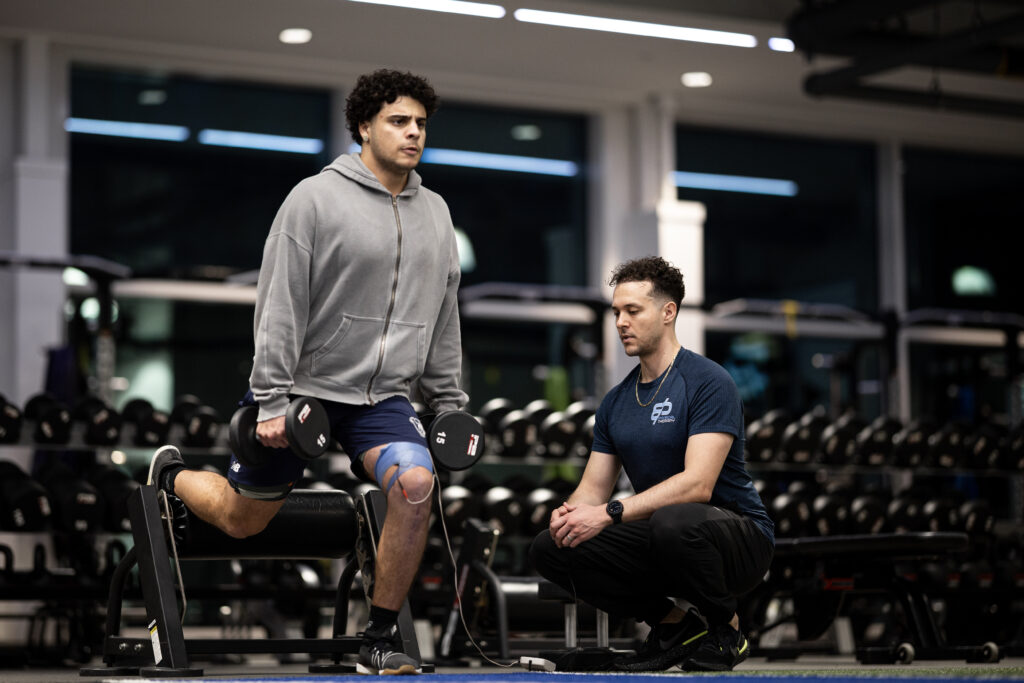
How Bando Approaches the Full Recovery Arc
At Bando Performance, return-to-sport rehab is not a checklist that ends when pain stops. It is a continuum that runs from initial injury management all the way through performance restoration.
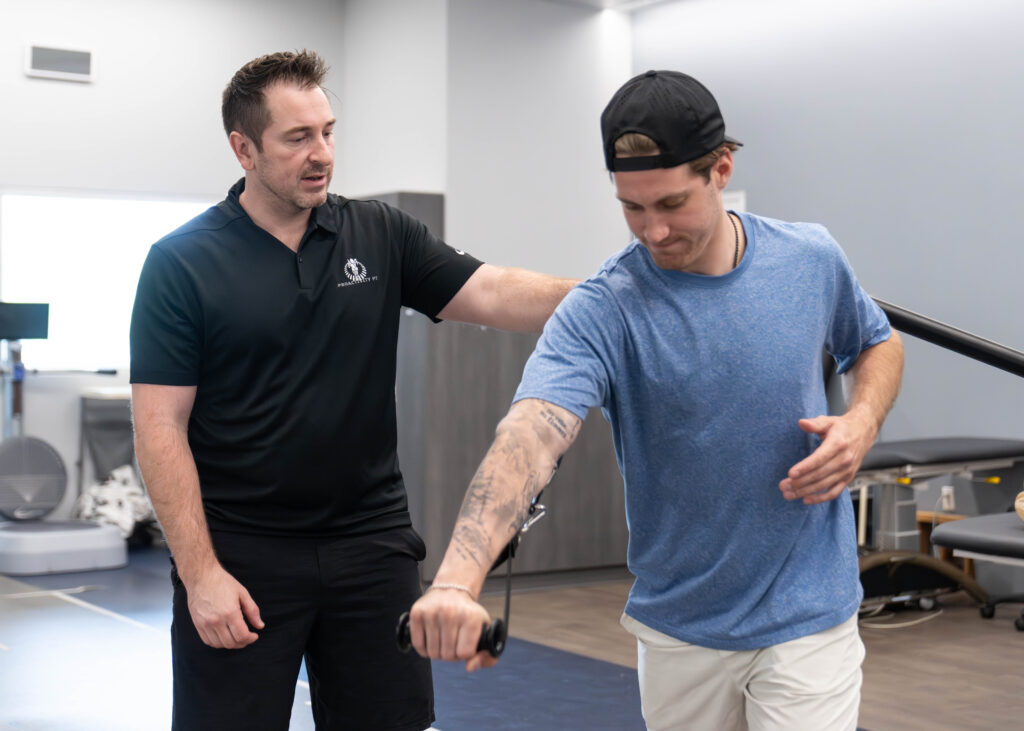
Because physical therapy and performance training operate under the same roof, athletes do not experience the handoff gap that often exists when those services are separate. A physical therapist and a strength and conditioning coach are not working in isolation from each other — they are working together, with a shared understanding of where an athlete is in their recovery and what they need to do next.
Return-to-play criteria are built into the process from the start. Athletes and parents know what the benchmarks are, not just what the timeline is. That clarity makes it easier to make informed decisions about when an athlete is genuinely ready, or when they need more time.
The goal is not an athlete who is pain-free. The goal is an athlete who is prepared to compete.
FAQs
How do I know when I’m actually ready to return to sport?
Pain resolution is a starting point, not an endpoint. True readiness involves restored strength symmetry, full range of motion, and the ability to perform sport-specific movements without pain, hesitation, or compensated mechanics. Working with a qualified provider who uses functional benchmarks gives athletes a much clearer picture of where they actually stand.
Is it okay to play through mild discomfort after an injury?
It depends on the source and nature of the discomfort. Some muscle soreness from rebuilding strength is normal and expected. Pain that is sharp, joint-specific, or worsens with activity is a signal worth paying attention to. When in doubt, having a qualified professional evaluate it is always the right call.
What happens if I return to sport too early?
The most common outcomes are re-injury at the original site, a new injury in a compensating structure, or a decline in performance that is difficult to trace back to the incomplete recovery. In more serious cases, returning too early can extend total recovery time significantly.
How long should rehab continue after pain goes away?
There is no universal answer, but for most sports injuries the functional recovery phase extends weeks to months beyond pain resolution, depending on the injury and the demands of the sport. The better question is not how long, but whether the athlete can meet the performance benchmarks their sport requires. That answer drives the timeline more reliably than a calendar does.