Physical therapy has a well-established identity in the world of athletics. You get hurt, you go to PT, you work through it, and when you are cleared you go back to training. That sequence is familiar to almost every athlete who has spent enough time competing, and the assumption embedded in it is equally familiar: physical therapy is a response to injury, not a tool you seek out when everything is going fine.
This thinking limits athletes to only seeing a physical therapist when they are already behind. Already hurt, already losing training time, already managing a problem that has been building long enough to become undeniable. The work of fixing something is harder and takes longer than the work of preventing it, and yet the prevention conversation rarely takes place until after an injury already has.
The athletes who tend to stay healthiest over the longest periods are rarely the ones who simply get lucky. They are the ones — a part of the programs surrounding them — who treated physical therapy not as an emergency service but as a standard part of athletic preparation. Proactive PT for athletes asks a different question than reactive PT. Instead of asking what is wrong and how to fix it, it asks what the body needs before something goes wrong, and what it would take to keep an athlete performing well across their career. For athletes at any level who are serious about their development, that is a question worth asking before there is an injury forcing the issue.

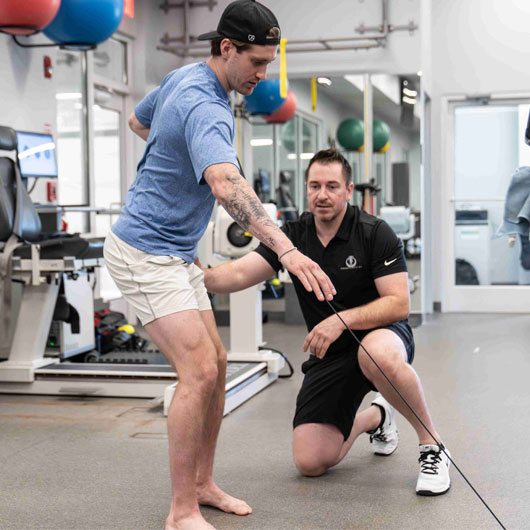
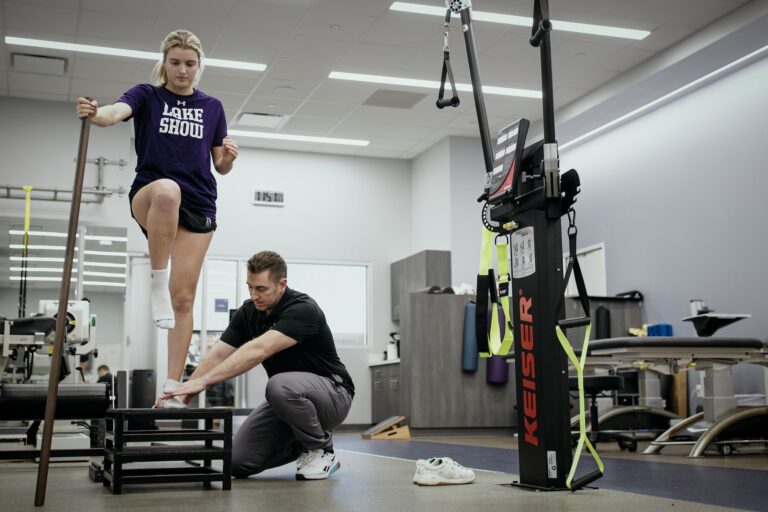
at Bando Performance, in Wellesley Massachusetts Friday, December 19, 2025.
(Photo by Eddie Monigan/Freelance)
What Proactive PT Actually Involves
The practical starting point for proactive physical therapy is a movement assessment: a structured evaluation of how an athlete’s body moves across a range of patterns relevant to their sport and their individual history. Unlike the assessments that happen at the beginning of injury rehabilitation, a proactive assessment is not trying to diagnose a problem. It is trying to build a complete picture of what the athlete’s body needs before problems develop.
What that assessment typically surfaces is information athletes did not know they were missing. Strength differences between the left and right sides that are large enough to alter movement mechanics. Hip or ankle mobility restrictions that are silently limiting stride length, squat depth, or rotational power. Stability deficits in the shoulder or core that are compensated for during low-demand activities but will become visible under the load of a full competitive season. Compensation patterns developed over years of sport-specific movement that place stress on structures not designed to carry it long-term.
None of these findings necessarily mean an athlete is injured or in danger of becoming injured imminently. What they mean is that the body is working harder in some areas than it needs to, and that a targeted intervention now is far less costly than managing the consequences later. From the assessment, a physical therapist builds an individualized plan: specific exercises, mobility work, and movement corrections targeted at what that particular athlete actually needs.
This is not a one-time visit. Proactive PT tends to be an ongoing relationship across a season or training cycle, with priorities shifting as the athlete’s situation changes. The focus in the off-season, when addressing weaknesses and rebuilding after a demanding competitive period, looks different from the focus during a season, when managing load and maintaining movement quality under fatigue are the primary concerns.
Who Benefits Most
The honest answer is that most competitive athletes would benefit from some version of this practice. But a few specific profiles make the case most clearly.
The athlete with a history of recurring injuries.
When the same area keeps breaking down, rest and rehabilitation address the immediate problem but rarely the underlying cause. Recurring injuries most often reflect a persistent physical limitation, a strength asymmetry, a movement compensation, a mobility deficit, that rehabilitation resolved symptomatically but not structurally. Proactive PT identifies and addresses those root causes in the windows between incidents rather than waiting for the next injury to make the intervention unavoidable.
The high school athlete in a development or recruiting window.
For a high school junior or senior whose performance over the next twelve months carries genuine stakes, a movement limitation that costs them speed, power, or efficiency is not just a health concern. It is a competitive one. Identifying and correcting those limitations during a training transition, before the season begins, is the kind of marginal gain that compounds across a recruiting year.
The multi-sport youth athlete.
Athletes who play multiple sports year-round with limited recovery between seasons accumulate physical stress in ways that rarely get systematically addressed. A proactive PT relationship provides a regular check on how the body is responding to that cumulative load, and it creates a mechanism for catching overuse patterns before they progress to injury. For these athletes, proactive PT is less a luxury and more a structural necessity given how much they are asking their bodies to manage.
The adult recreational athlete.
Adults who want to continue competing, training, and staying physically active into their 30s, 40s, and beyond are managing a reality that younger athletes are not yet confronting: recovery takes longer, compensation patterns are more established, and the window for addressing limitations before they become injuries is narrower. Proactive PT gives these athletes a professional perspective on what their body actually needs, rather than discovering the answer through a series of avoidable injuries.
The Performance Angle
Injury prevention tends to be the primary argument for proactive PT, and it is a strong one. But there is a performance argument that deserves equal attention and often goes unmade.
Physical limitations reduce athletic output even when they produce no pain. A soccer player with restricted hip mobility cannot generate the same stride length or rotational power as one without that restriction, regardless of how hard they train. A baseball pitcher with limited shoulder mobility will compensate through the elbow and trunk in ways that reduce velocity and increase wear. A basketball player with poor single-leg stability will not cut as sharply or land as safely as one whose hip and ankle function is optimal. These are not hypothetical risks. They are performance gaps that show up in what athletes can produce on the field, in measurable ways, without any injury being present.
Addressing those limitations through proactive PT produces performance gains, not just injury prevention. An athlete who restores full hip mobility moves differently. An athlete who corrects a significant strength asymmetry produces force more efficiently. These improvements do not require an injury to justify them; they stand on their own as reasons to invest in PT as part of a performance program rather than reserving it strictly for treatment.
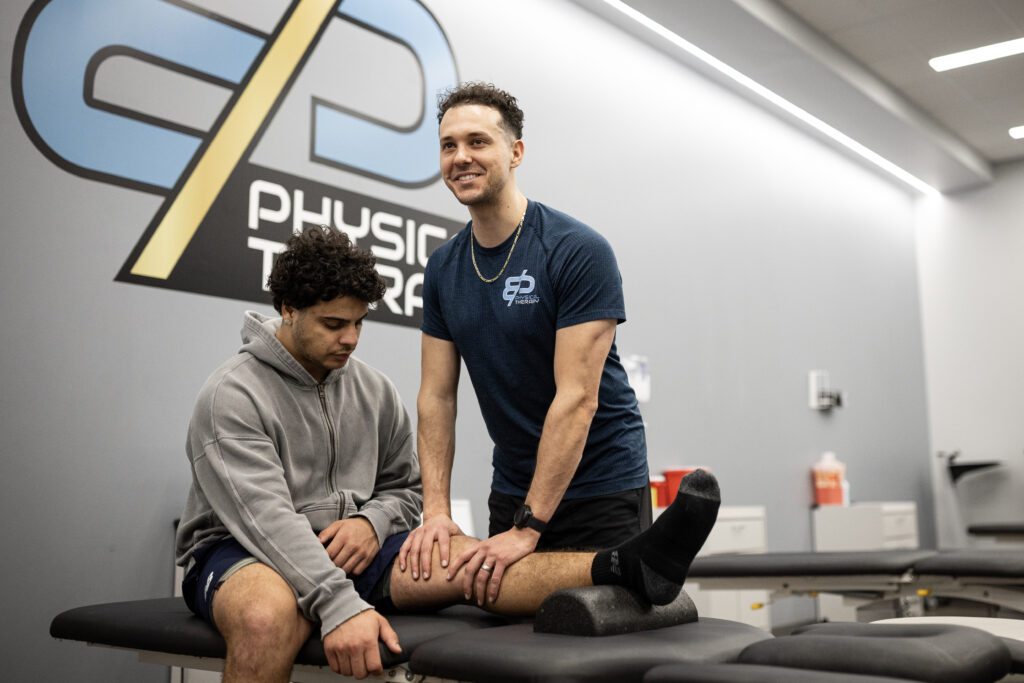
at Bando Performance, in Wellesley Massachusetts Thursday, January 8, 2026.
(Photo by Eddie Monigan/Freelance)
Proactive PT vs. Reactive PT
The difference between proactive and reactive physical therapy is not really about techniques or exercises. It is about timing and objectives.
Reactive PT begins with a deficit. An injury, a structural problem, a loss of function that needs to be restored. The work is important, the outcomes are meaningful, and good reactive PT gets athletes back to competition prepared to perform. But reactive PT is always catching up. It is addressing a problem that developed over time, and the intervention is happening after that development has already run its course.
Proactive PT (or performance physical therapy) begins with the athlete as they currently are and asks what they need to stay healthy and perform better. The limitations it identifies may not produce symptoms yet, which is precisely what makes addressing them now more efficient than addressing them later. A hip mobility restriction caught in the off-season is a six-week corrective exercise program. The same restriction, left to accumulate load across a full season until it contributes to a hip flexor strain, is potentially months of rehabilitation.
The time and resource investment in proactive PT is real. So is the comparison point. Most athletes who have been through a significant injury would trade that recovery period for the training time that proactive intervention might have bought them.
Addressing the Common Objections
“I’m not injured, so I don’t need PT.”
This is the primary assumption we intend to challenge. Not needing reactive PT because you are not currently injured is not the same as having nothing to gain from PT. The value of proactive PT is specifically that it does not wait for a problem to become acute before addressing it. The absence of pain is a good starting point, not a reason to stop there.
“I don’t have time for PT on top of training.”
Proactive PT is designed to fit alongside training, not compete with it. In an integrated model, the corrective work a PT prescribes often replaces lower-value components of an existing training program rather than adding hours to a schedule that is already full. A single session every two to four weeks alongside targeted daily corrective exercises is a realistic structure for most athletes.
“My coach handles this.”
Good coaches address movement quality and manage athlete load with real skill. A physical therapist brings a different and complementary set of tools: clinical assessment capabilities, a diagnostic lens for musculoskeletal function, and the ability to identify and address limitations that exist below the threshold of what shows up in training. These roles work best together rather than as substitutes for one another.
“I’ll go when something actually goes wrong.”
This is a reasonable position if the goal is to manage injuries as they happen. It is a less effective strategy if the goal is to minimize the number of injuries that happen in the first place. The choice between proactive and reactive PT is, in a meaningful sense, a choice about when to invest the time: before a problem develops, or after it already has.
What This Looks Like at Bando
At Bando Performance, proactive physical therapy is not a separate program running alongside the performance training. It is integrated into the same system. Athletes who come to Bando for strength and conditioning have access to the same physical therapists who work with post-injury athletes, and the movement assessments that inform proactive PT are the same ones that drive programming decisions across the facility.
That integration matters because the value of proactive PT is maximized when the physical therapist and the strength coach are working from the same picture of the athlete. A hip mobility restriction identified in a PT assessment should inform how that athlete squats in the weight room. A strength asymmetry discovered during corrective work should change how loading is distributed in their programming. When PT and performance training operate in silos, that information transfer does not happen reliably. When they operate together, it does.
For youth athletes across the greater Boston and Metro West area, this model means that the investment in physical performance and the investment in physical health are one in the same; made in the same place, by a team that communicates about the same athlete. That is what proactive care looks like when it is built into the structure of a program rather than added on top of it.