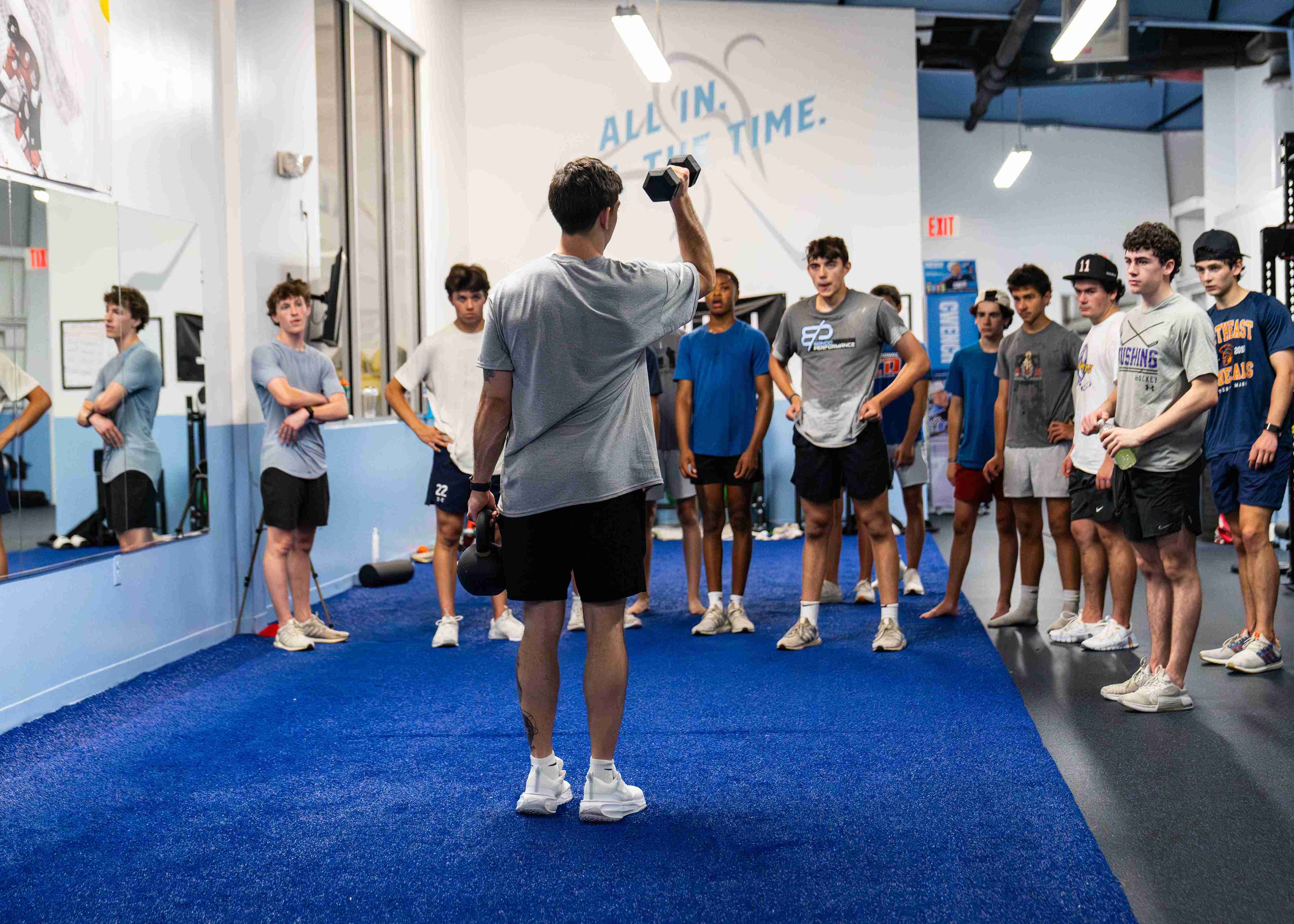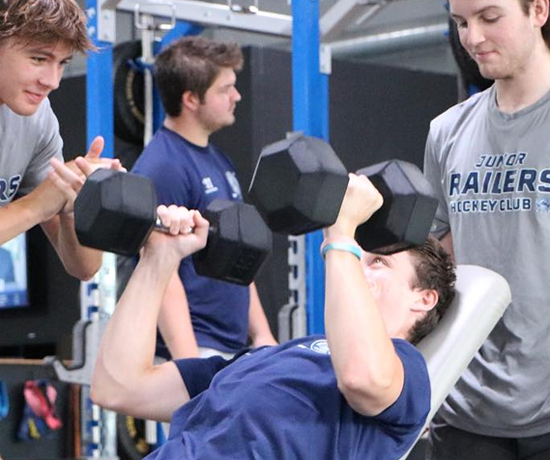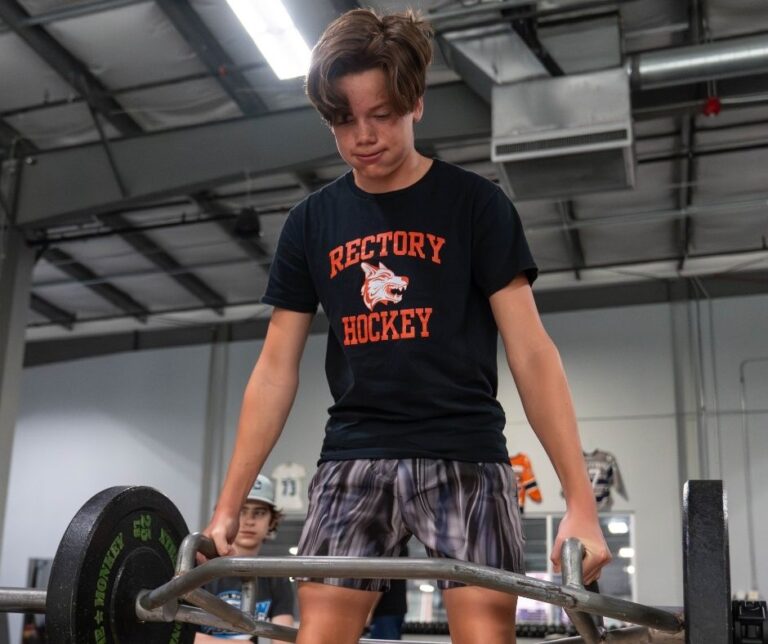
If you’ve ever watched your child play a sport and wondered whether strength training might help them — or worried that it might hurt them — you’re not alone.
The question comes up constantly: Is lifting weights safe for kids? Will it stunt their growth? Should they wait until high school? Do they really need it at all?
These are fair concerns. But the evidence on youth strength training has become increasingly clear, and what the research shows may surprise many parents.
This guide breaks down what parents need to know about strength training for young athletes. Including when to start, what a good program looks like, and why more sports medicine professionals now view it as one of the best things a developing athlete can do.
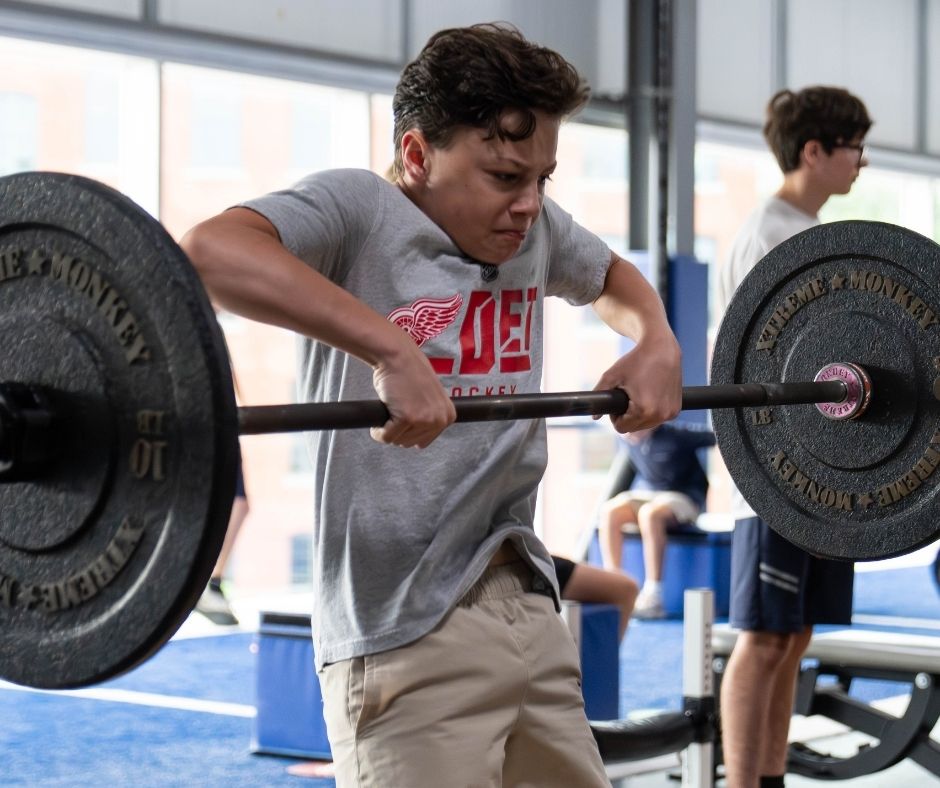
Is Strength Training for Young Athletes Safe?
Yes, when properly supervised and age-appropriate, strength training is safe for young athletes. Both the American Academy of Pediatrics (AAP) and the National Strength and Conditioning Association (NSCA) have formally endorsed supervised resistance training for youth. The concern is not strength training itself. The concern is unsupervised, poorly programmed, or improperly loaded training.
In fact, supervised strength training has a lower injury rate than most youth sports, including soccer, basketball, and football. The risks that parents worry about are largely associated with programs that lack qualified instruction or push young athletes too hard, too fast.
When done right, youth strength training is not dangerous. It’s protective.
Debunking the Biggest Myths About Youth Strength Training
Myth 1: Lifting weights will stunt my child’s growth.
This is the most common concern parents raise, but it is not supported by the science.
The growth plate concern comes from the idea that compressive loads could damage developing bone. But research has consistently shown that supervised resistance training does not cause growth plate injury and may actually improve bone density in young athletes. The activities more likely to cause growth plate stress are repetitive, high-impact sports movements — like pitching mechanics or landing jumps — not properly programmed strength work.
Myth 2: Kids should wait until high school to start strength training.
There is no evidence-based cutoff that says athletes need to wait until a certain age. What matters more than age is readiness. The ability to follow instructions, demonstrate basic movement patterns, and stay engaged in a structured environment.
Many sports performance professionals begin introducing basic movement skills and bodyweight work with athletes as young as 7 or 8. Structured, load-bearing programs are generally appropriate around age 10 to 12, depending on the individual. Waiting until high school often means missing years of foundational development.
Myth 3: Young athletes just need cardio and sport practice.
Sport practice builds sport skills. Cardio builds conditioning. But neither consistently addresses muscle strength, joint stability, balance, or the force tolerance needed to handle the physical demands of competition.
Young athletes who only train through their sport often develop imbalances, limited mobility, and movement patterns that eventually contribute to overuse injuries. Strength training fills those gaps.
Myth 4: Strength training is only for athletes who want to get bigger.
Strength training improves power, speed, coordination, balance, and resilience to injuries. It’s not just about growing muscles. For young athletes, the primary benefits of resistance training are neurological: the brain and nervous system become more efficient at recruiting muscle. This is why younger athletes often see significant strength gains without visible changes in size.
What the Research Actually Shows
The research on youth strength training has grown substantially over the past two decades. Key findings include:
- Supervised resistance training reduces injury risk in young athletes by improving joint stability, force tolerance, and movement mechanics
- Youth strength training improves bone density and supports healthy skeletal development
- Young athletes who participate in structured strength programs show improvements in sprint speed, jump height, and agility
- Strength training has positive effects on confidence, body image, and mental health in adolescents
- The injury rate in supervised youth resistance training programs is among the lowest of any athletic activity
The concern should not be whether your athlete is strength training. It should be whether they’re doing it in a program that is qualified, progressive, and appropriate for their development stage.
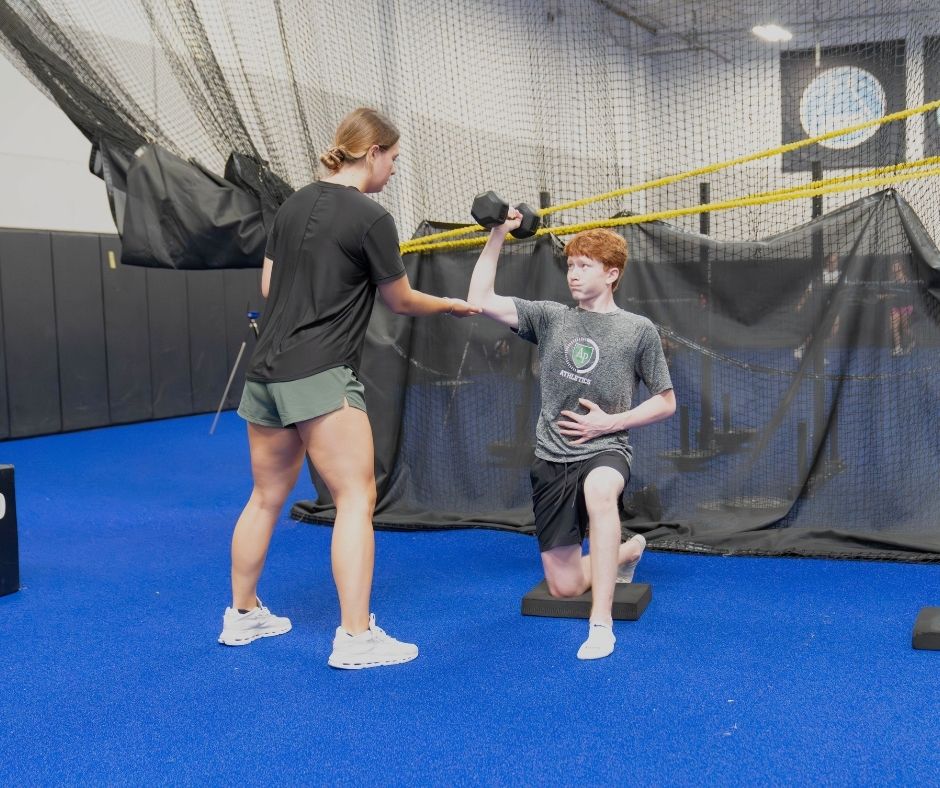
When Should Young Athletes Start?
Age alone is not the right measure. Readiness matters more.
A child is generally ready for structured strength training when they can:
- Follow multi-step instructions from a coach
- Demonstrate basic movement patterns like squatting and hinging
- Stay focused and engaged throughout a session
- Understand the purpose of the training
For most athletes, basic movement and coordination work can begin around ages 7 to 9. Structured resistance training with external load is generally appropriate starting around age 10 to 12, with programming becoming more sophisticated and sport-specific as athletes move into high school.
Here is a general framework for how programming should evolve:
Ages 7–10: Movement Foundations
- Bodyweight exercises, balance, coordination
- Movement pattern development (squat, hinge, push, pull)
- Games and activities that develop motor skills into athletic literacy
Ages 10–14: Introductory Strength Training
- Light resistance introduced with strong emphasis on form
- Bilateral and single-leg strength development
- Core stability and deceleration mechanics
- Sport-relevant movement patterns
Ages 14–18: Performance-Focused Development
- Progressive overload in structured strength programs
- Power development including plyometrics and Olympic lifting variations
- Sport-specific conditioning and movement work
- Periodization aligned with athletic season
What a Good Youth Strength Program Looks Like
Not all strength programs are created equal. A well-designed youth program should look different from a standard adult gym program. Here is what to look for:
Movement quality comes before load.
Young athletes should demonstrate solid mechanics before weight is added. Form breaks down under load, and poor form under load is where injuries happen.
Qualified coaches who understand youth development.
The coach matters more than the program itself. Coaches working with young athletes should understand appropriate progressions, communication styles for that age group, and when to push versus when to pull back.
Progressive programming with appropriate recovery.
Good youth programs build systematically over weeks and months. Volume, intensity, and complexity should increase gradually, not all at once. Recovery, sleep, and nutrition should be addressed as part of the program.
Multi-directional, sport-informed training.
Young athletes benefit from training that reflects how their body moves during competition. This includes lateral movement, rotational strength, deceleration mechanics, and single-leg stability — not just traditional weight-lifting movements.
Assessment before programming.
Conducting a movement assessment to identify limitations, imbalances, and injury history before building a training plan is standard practice at performance facilities like Bando. Athletes should not follow a cookie-cutter program without any understanding of their individual needs.
Strength Training as Injury Prevention
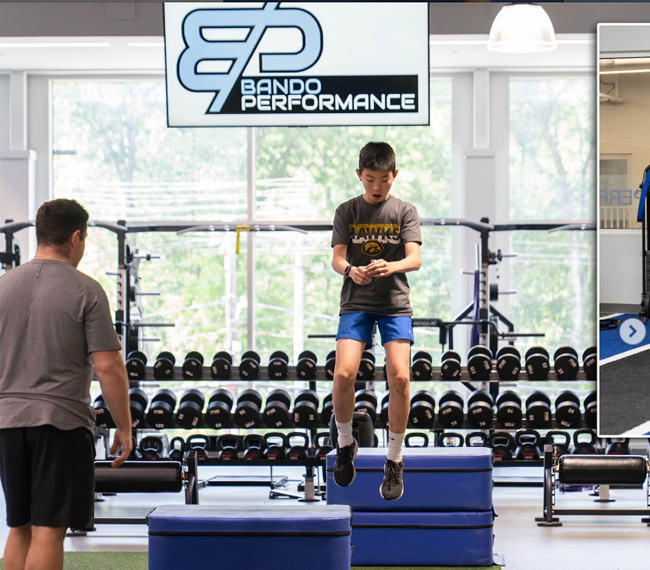
One of the strongest arguments for youth strength training is one that parents often haven’t considered: it significantly reduces injury risk.
Many of the most common youth sports injuries have strong links to muscle weakness, poor landing mechanics, movement imbalances, and insufficient load tolerance.
Strength training directly addresses all of these.
For multi-sport athletes who play year-round without a true off-season, developing strength matters even more. Consistent exposure to the same sport-specific stresses without strength work creates the conditions for overuse injuries to develop over time.
A movement assessment is often the best starting point for identifying which risks are most relevant for your athlete. Understanding where imbalances or limitations exist makes it possible to address them proactively before they become injuries.
Questions to Ask Before Enrolling in a Youth Strength Program
Not every facility or program is equipped to train young athletes well. Before committing, parents should ask:
- Does the coaching staff have experience working specifically with youth athletes?
- Is there an individual assessment before athletes begin training?
- How does the program adjust for athletes at different stages of development?
- What is the approach to athlete communication and feedback?
- Is there coordination between the strength program and the athlete’s sport or medical history?
- What does a typical session look like, and how is load managed?
Parents and athletes alike should be cautious about programs that cannot answer these questions clearly.
How Bando Approaches Youth Strength Training
At Bando Performance, our approach to youth strength training is built around one principle: develop athletes the right way, rather than the fastest way.
That means starting with movement assessments to understand each athlete’s individual profile before any programming begins. It means building progressively, with qualified coaches who understand how to communicate with athletes at different developmental stages. And it means integrating physical therapy and performance training under one roof — so that when athletes are navigating soreness, imbalance, or return from injury, they have a complete team working together with them.
Our multi-sport focus means that whether your athlete plays soccer, hockey, basketball, football, baseball, or multiple sports throughout the year, the programs we build reflect the actual demands of their athletic life.
For parents in the greater Boston area looking for a trusted environment to support their athlete’s long-term development, Bando is built for exactly that.
FAQs
Is it safe for a 13 year old to lift weights?
Yes. A 13-year-old who receives qualified instruction, trains with appropriate load, and follows a progressive program can strength train safely and effectively. The AAP and NSCA both support supervised resistance training at this age. The key word is supervised.
Will strength training hurt my child’s growth plates?
The research does not support this concern when training is properly supervised. Growth plate injuries in youth strength training are rare and are typically associated with improper technique, maximal loads, or unsupervised training — not structured programs designed for young athletes.
How often should young athletes strength train?
For most youth athletes, two to three sessions per week is appropriate alongside their sport training. More is not necessarily better, and recovery is especially important for developing athletes. Programming should be adjusted based on the athlete’s sport season, training age, and overall workload.
What is the difference between youth strength training and adult lifting?
Youth strength programs emphasize movement quality, coordination, and foundational strength patterns over maximum load. The goal is athletic development, not peak performance in the gym. Adult programs can tolerate higher intensity and volume. Youth programs are designed to build the physical foundation that makes higher-intensity training effective and safe later.
My child plays multiple sports. Should they still strength train?
Multi-sport athletes are often among those who benefit most from structured strength training. Transitioning between different sports throughout the year can create imbalances and overuse patterns that a good strength program can help address. Multi-sport athletes also benefit from building general athletic qualities — speed, power, stability, and resilience — that transfer across all their sports.
Final Thoughts
The question most parents are really asking when they wonder about youth strength training is this: am I making the right choice for my child?
The evidence is clear. Supervised strength training supports healthy athletic development, reduces injury risk, and helps young athletes build the physical foundation they need to compete and thrive. The risks come from doing it wrong, not from doing it at all.
The most important thing is finding a program and environment that takes your athlete’s development seriously. One that assesses before programming, progresses appropriately, and understands what it means to train a 13-year-old differently than a 17-year-old or an adult.