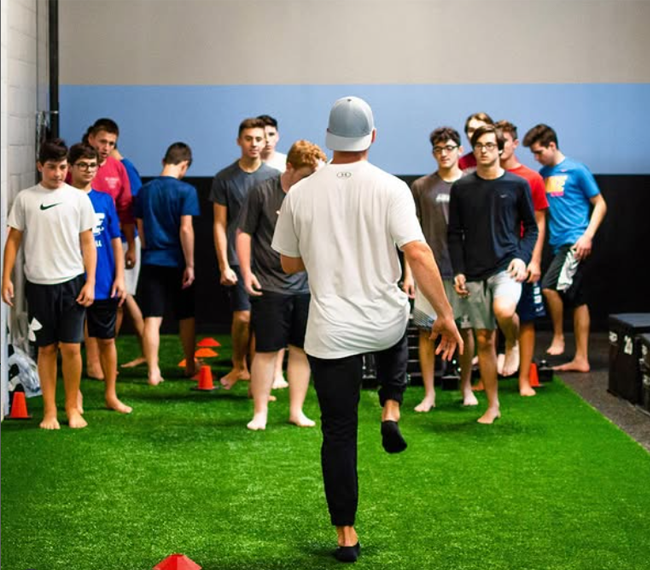
Walk into almost any youth speed and agility session in the country and you will see the same thing: cones in a line, kids running through them as fast as they can, coaches clapping and encouraging effort. It looks like speed training. It feels productive. And for the most part, it does very little to make athletes actually faster.
The problem is not effort. Youth athletes bring plenty of that. The problem is that most of what gets labeled speed training is really conditioning in disguise. Lots of volume, lots of movement, not much quality. Genuine speed development is a different discipline entirely. It targets specific mechanical and neurological qualities, demands full recovery between reps, and produces results that transfer directly to whatever sport an athlete plays. The drills that develop real speed tend to be simpler, shorter, and more deliberate than what most parents and coaches expect.
This post covers drills that actually develop speed for young athletes, explains the rationale behind each one, and offers a practical framework for how to incorporate them into training without overcomplicating the process.
What Speed Training Actually Is
Speed is not a product of effort alone. It is the result of mechanics, force production, and neuromuscular coordination working together efficiently. How well an athlete applies force into the ground, at what angle, with what timing and what mechanics determines how fast they move. Those are all trainable qualities, but training them requires specificity.
There is also an important distinction between acceleration and maximum velocity. Acceleration is the phase where an athlete builds from a standing or moving start to full speed, typically over the first 10 to 30 meters of a sprint. Maximum velocity is the phase where an athlete has reached top speed and is working to sustain it. These two phases have different mechanical demands and respond to different training stimuli. Most sport situations involve acceleration more than pure top-end speed, but both phases deserve attention in a well-rounded program.
What unites both phases is the neurological demand. Sprint training at high intensity taxes the central nervous system in a way that lower-intensity running does not. When fatigue accumulates, mechanics deteriorate and the athlete is no longer training speed; they are training the ability to run slowly while tired. Full recovery between sprint efforts is not optional if the goal is genuine speed development.
What Youth Athletes Specifically Need
Young athletes adapt to speed training quickly. Their nervous systems are highly responsive during childhood and adolescence, which means the window for building foundational movement patterns is genuinely valuable and worth investing in. But that same adaptability cuts both ways: poor mechanics trained at high speed become ingrained patterns that are difficult to unlearn later.
For youth athletes, movement quality comes before volume or intensity every time. A young athlete who learns to sprint with a forward lean, active foot contact, and powerful hip extension will develop real speed. A young athlete who sprints with a heel strike, upright posture, and limited hip drive will get faster at running incorrectly. The mechanical foundation matters more at this stage than how many reps get done.
It is also worth understanding that speed gains in youth athletes are largely neurological rather than muscular. Young athletes who improve their sprint times are primarily developing better coordination and motor patterns, not bigger engines. That is why short, high-quality efforts with full recovery produce better results than long runs and ladder drills at this stage of development.
Acceleration Phase Drills
The ability to accelerate quickly is the most sport-relevant speed quality for the vast majority of youth athletes. Soccer, basketball, football, lacrosse, and baseball all demand explosive starts from standing or moving positions far more than sustained top-speed running. These drills build the mechanical and neuromuscular foundation of a powerful, efficient first step.
Wall Drives
The athlete leans into a wall with straight arms, body in a rigid plank position at roughly 45 degrees. From there, they drive one knee up repeatedly, focusing on a powerful push through the grounded foot and a high knee position on the drive leg. Wall drives isolate the exact movement pattern of early acceleration without the complexity of a full sprint, allowing athletes to feel and repeat correct mechanics before adding speed.
Coaching cue: push the ground away, don’t just lift the knee.
Falling Starts
The athlete stands tall, then leans forward from the ankles until balance forces a first step. The key is that the lean happens before the legs react—this teaches the athlete to lead with their mass, which is the instinct behind effective acceleration. Most young athletes over-stride or pop upright too early when they sprint; falling starts train the opposite habit.
Coaching cue: fall until you have to catch yourself, then go.
Light Sled Pushes
Sled pushes with a conservative load reinforce acceleration mechanics under resistance. The forward lean, powerful leg drive, and short ground contact times that a sled demands are the same qualities that produce explosive acceleration. The key is keeping the load light enough that sprint mechanics are not compromised. A sled that is too heavy slows the athlete to a crawl and trains strength, not speed.
Coaching cue: stay long, stay low, push through the ground.
3-Point Start Sprints
Short sprints of 10 to 20 meters from a three-point stance bridge the gap between isolated drills and full sprint effort. The stance itself teaches the body position and forward lean of acceleration, and the brief sprint distance keeps the work focused on the first steps rather than top-end speed. Full recovery between efforts is essential here.
Maximum Velocity and Sprint Mechanics Drills
Once athletes have a foundation in acceleration, developing their mechanics at higher speeds compounds those gains. These drills work on the technical qualities of full-speed sprinting: foot contact, hip height, stride cycle timing, and arm action.
A-Skips
A-skips are one of the most fundamental sprint mechanics drills in the toolbox. The athlete moves forward with an exaggerated marching pattern, driving one knee up while pushing through the opposite foot and maintaining a tall posture. The focus is on pulling the foot up into dorsiflexion (toes up) before the knee rises and landing directly under the hips. Done correctly, A-skips develop the cyclical leg mechanics and stiffness that carry over directly to faster, more efficient top-speed running.
Coaching cue: tall hips, toes up, land under your body.
B-Skips
B-skips extend the A-skip by adding a pawing action through the drive leg, mimicking the hip extension that happens at maximum velocity. The athlete drives the knee up as in an A-skip, then extends and sweeps the leg down and back before landing. This drill develops the timing and hip extension power that separate average sprinters from fast ones.
Coaching cue: drive up, then sweep the ground.
Wicket Runs
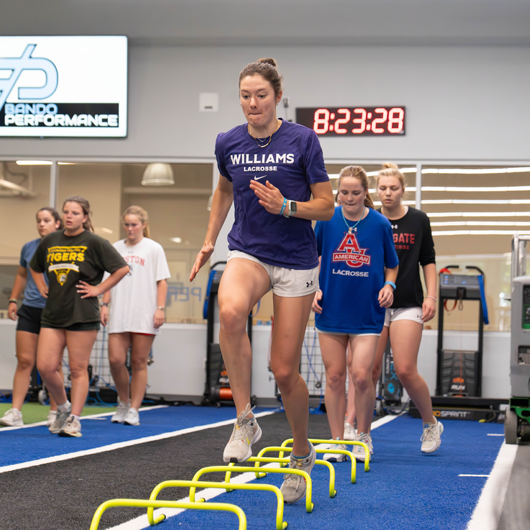
Low hurdles or pool noodles placed at set intervals on the ground constrain the athlete’s stride length and frequency, teaching them to find an efficient rhythm at speed without overthinking it. The wickets do the coaching. Athletes who overstride will hit them; athletes who shuffle will not have enough room. A well-set wicket run is one of the most effective tools for developing optimal top-speed mechanics with minimal verbal instruction.
Fly 10s and Fly 20s
The athlete builds speed over 20 to 30 meters, then sprints at maximum effort through a 10 or 20-meter timed or marked zone. This is pure maximum velocity work: the build-up removes the acceleration variable and ensures the athlete reaches true top speed before the measured effort begins. Fly sprints should be done completely fresh, with full recovery (at least two minutes) between efforts.
Change-of-Direction and Sport-Specific Speed Drills
Straight-line speed matters, but most sports demand the ability to change direction quickly and efficiently. Change-of-direction speed is a related but distinct quality that involves deceleration, body control, and re-acceleration, and it deserves dedicated attention in any youth speed program.
Pro Agility Shuttle
The athlete starts at a center cone, sprints five yards in one direction, touches a line or another cone, sprints ten yards in the other direction, touches that line or cone, and finishes back through the center. The shuttle tests and trains deceleration mechanics, direction change efficiency, and the ability to re-accelerate quickly from a low position. For athletes in field and court sports, this pattern is closely related to what happens in live competition.
Reactive Cone Drills
A coach points or calls a direction and the athlete reacts and moves accordingly. Adding a decision-making element to movement training bridges the gap between technical drills and true game speed. An athlete who moves fast in a predetermined pattern is developing one quality. An athlete who moves fast in response to unpredictable information is developing something closer to what their sport actually demands.
Band-Resisted Lateral Shuffles
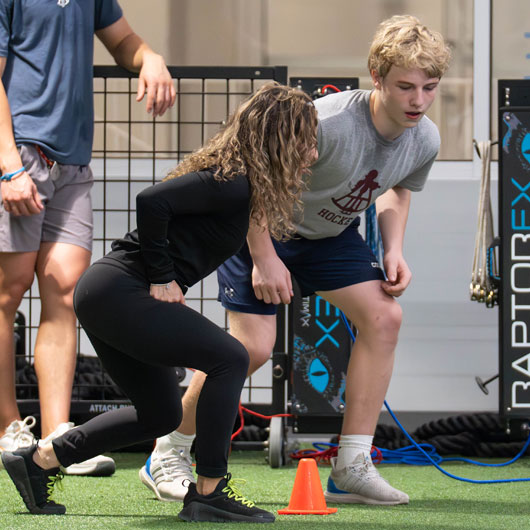
A resistance band around the hips loads the lateral movement pattern and develops the hip strength that underlies quick lateral quickness. The band creates resistance in the direction of movement, forcing the athlete to push harder and stay lower than they would unassisted. This drill is particularly valuable for basketball, soccer, and lacrosse athletes whose sports demand sustained lateral mobility.
How to Structure Speed Training for Youth Athletes
The drills above are only as useful as the session structure around them. A few practical principles make the difference between speed development and expensive conditioning.
Speed work should always come first in a training session, before any meaningful fatigue has accumulated. A tired athlete cannot sprint at true maximum intensity, which means any speed work done after conditioning or heavy lifting is not really speed work.
Volume should be low and quality should be high. For most youth athletes, two to four quality repetitions per drill is appropriate. More reps does not mean more improvement in this context. It means diminishing quality and accumulated fatigue that works against the goal.
Rest between reps is not laziness. It is the mechanism. Full recovery between sprint reps, typically 60 to 90 seconds for short distances and longer for full-speed efforts, ensures the athlete can actually sprint the next rep rather than jog it.
Two to three speed sessions per week is sufficient for meaningful development alongside normal sport participation. In-season, the goal shifts to maintenance rather than building. Off-season is the time to make the biggest gains.
The Connection Between Strength and Speed
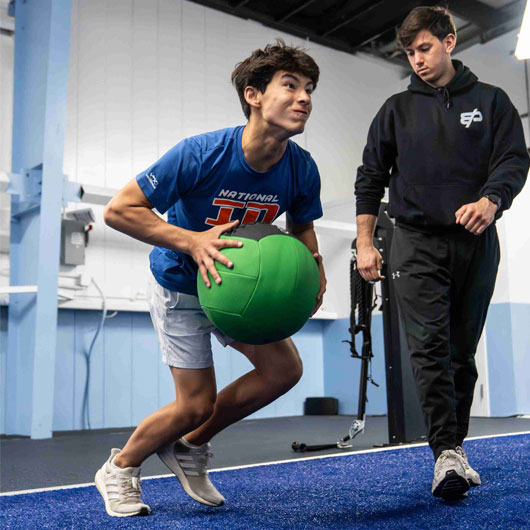
Speed training and strength training are not competing priorities for youth athletes. They are complementary. Force production, which is the engine behind acceleration, comes largely from the hips, glutes, and legs. Single-leg stability, which governs how efficiently an athlete transfers force at each point of contect with the ground, comes from the same place. Athletes who are stronger in the right ways tend to be faster, and a well-designed strength program accelerates the gains that speed drills alone cannot produce.
For parents and athletes who want a fuller picture of how strength development supports speed, the principles behind youth-appropriate strength training are worth understanding alongside the drill work.
How Bando Develops Speed in Youth Athletes
Speed development at Bando Performance is built into the broader athletic training program rather than treated as a standalone service. Young athletes work on sprint mechanics, acceleration, and change-of-direction skills alongside their strength and conditioning work, with progressions that match their age, sport, and current movement quality.
The goal is not to make athletes fast in a drill setting. It is to make them faster on the field, court, or track where it actually counts. That requires connecting technical speed work to the specific movement demands of each athlete’s sport, and doing so with the kind of coaching consistency that produces real, lasting improvement.
For youth athletes in the Metro West and greater Boston area looking to develop a genuine speed advantage, Bando’s performance training program is built to deliver exactly that.
FAQs
At what age should youth athletes start speed training?
Foundational movement and coordination work can begin as early as age 7 or 8. Structured sprint mechanics and drill-based speed training become increasingly appropriate from around age 10 to 12, when athletes have the attentional capacity and body awareness to benefit from technical coaching. The emphasis at younger ages should always be on movement quality and enjoyment rather than measured performance.
How long does it take to see results from speed training?
Many youth athletes show measurable improvement in sprint mechanics and times within four to eight weeks of consistent, well-structured training. Neuromuscular adaptations happen relatively quickly at younger ages, which is one of the reasons early investment in speed development pays dividends across an athletic career. Continued improvement depends on consistent practice and progressive challenge over time.
Should youth athletes do speed training in season?
Yes, with appropriate adjustments. In-season speed work should be lower in volume and focused on maintenance rather than development, since the sport itself is already providing significant physical stimulus. A short acceleration session once per week during the season is generally sufficient to keep gains from eroding. The bulk of speed development work is best done in the off-season.
Is speed training safe for young athletes?
When supervised by qualified coaches and structured with appropriate volume and recovery, speed training is safe for youth athletes. The most common issues arise from too much volume, insufficient rest between reps, or poor mechanics performed at high speed without correction. A well-run session prioritizes quality over quantity and never pushes athletes through fatigue to the point where form breaks down significantly.
Final Thoughts
The athletes who get faster are not necessarily the ones who run the most. They are the ones who train speed deliberately, with the right drills, the right structure, and enough recovery to actually sprint at maximum effort when it counts. For youth athletes, the opportunity to build that foundation is real and the window is wide. Done well, speed development at a young age creates advantages that compound across an entire athletic career.
If you want to learn more about how Bando Performance approaches speed development for youth athletes in the Metro West area, we are happy to walk you through what that looks like in practice.