There is a persistent belief that speed is something you either have naturally or you develop by running more. Fast athletes are fast because of their genes, or because they play enough games that their body eventually figures it out. The weight room, in this view, is for getting bigger and stronger, not faster. Athletes who want to improve their sprint times should be running, not lifting.
Near everything regarding this belief is wrong. Sprinting is not primarily a function of how much running an athlete does. It is a function of how much force they can apply into the ground and how quickly they can do it. Those are measurable physical qualities, and they are developed through training that is largely rooted in the weight room. The fastest athletes at every level of athletics are not fast in spite of their strength training. They are fast because of it.
Let’s dive into the mechanism behind that relationship, which exercises contribute most directly to sprint speed, and how athletes can structure their training to translate strength gains into genuine speed on the field.
The Physics of Sprinting
Sprint speed is the product of two variables: stride length and stride frequency. Longer strides cover more ground per step. Higher stride frequency means more steps per second. The athletes who are fastest typically have an advantageous combination of both, and both are governed by the same underlying physical quality: the ability to apply force into the ground explosively.
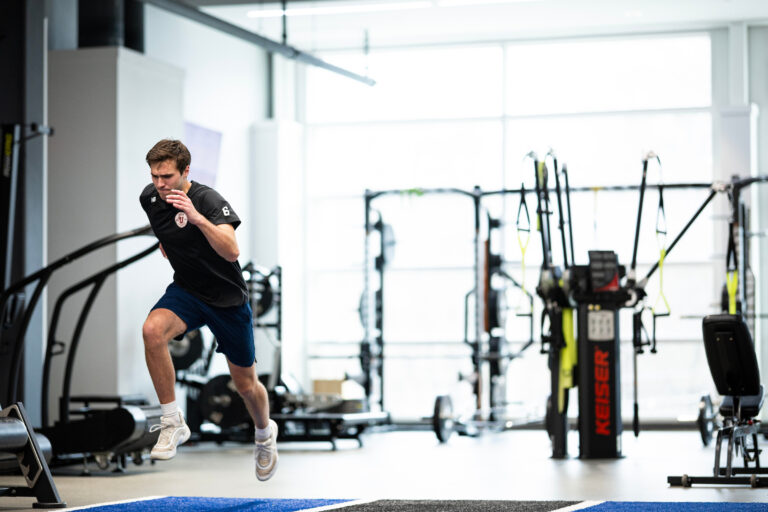
Each stride in a sprint involves a brief moment of ground contact during which the athlete’s foot pushes against the ground and the ground pushes back, propelling them forward. The shorter that ground contact time, and the greater the force applied during it, the faster the athlete moves. Elite sprinters spend remarkably little time on the ground per stride compared to slower athletes. Their feet are in contact with the ground for fractions of a second, and the force they apply during that window is substantial.
This means that sprint training is, in a meaningful sense, force production training. An athlete who can produce more force in less time will spend less time on the ground per stride, cover more distance with each step, and ultimately move faster. Strength training develops exactly those qualities. The connection between the weight room and the track is not indirect or incidental. It is mechanical.
How Strength Training Builds the Foundation for Speed
The specific ways in which strength training improves sprint performance come down to a handful of related mechanisms, each targeting a different piece of the force production puzzle.
Maximal strength raises the ceiling for power output.
Explosive power, the ability to produce force rapidly, is constrained by how strong an athlete is in absolute terms. An athlete who cannot produce significant force cannot produce it explosively either. Increasing maximal strength through compound movements raises the upper limit of power output, which has a direct carry-over to acceleration and top-end speed.
Hip and glute strength drives propulsion.
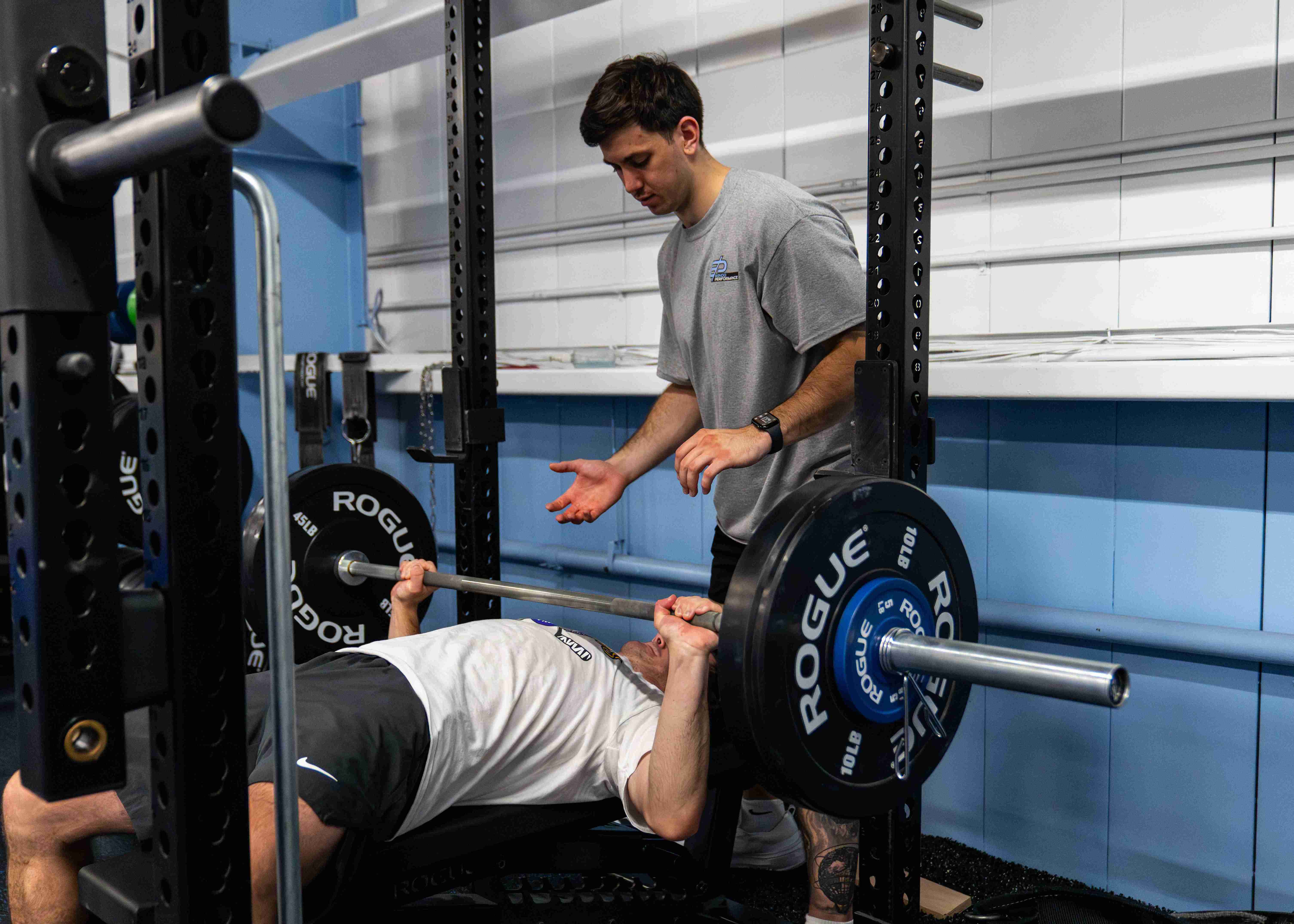
The primary engine of sprint acceleration is hip extension: the explosive push through the grounded leg that drives the body forward. The glutes, hamstrings, and hip extensors are the muscles most responsible for this movement. Athletes with weak posterior chains are leaving propulsive force on the table with every stride. Deadlifts, hip thrusts, and Romanian deadlifts target this pattern directly and are among the most transferable strength exercises for sprint performance.
Single-leg strength governs how force is applied.
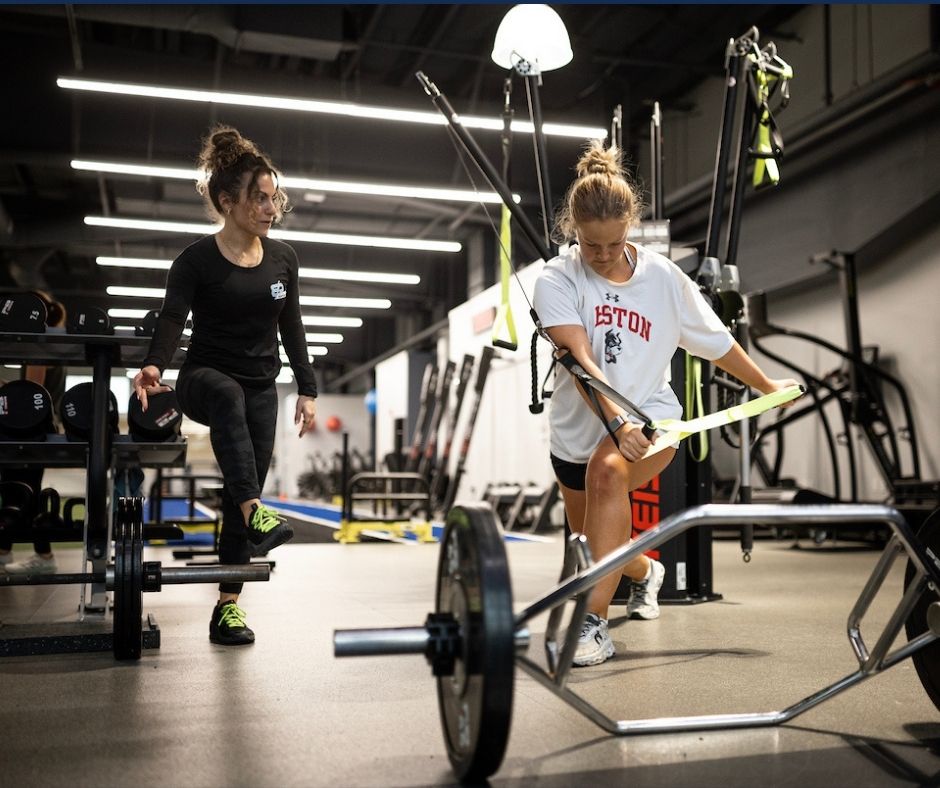
Sprinting is not a bilateral activity. Every stride is a single-leg force application, which means that the ability to stabilize and produce force through one leg at a time is the relevant physical quality. Athletes who are strong in a squat but weak in a split squat or single-leg Romanian deadlift often have bilateral strength that does not transfer efficiently to sprint mechanics. Unilateral training closes that gap.
Eccentric strength improves stiffness and ground contact.
The brief ground contact phase of sprinting requires the leg to stiffen rapidly as the foot hits the ground and then produce force before leaving it. This stiffness, sometimes called leg spring stiffness, is closely related to eccentric strength: the ability to control force as a muscle lengthens under load. Athletes with higher eccentric strength tend to display shorter ground contact times and more efficient energy return from each stride. Nordic hamstring curls in particular have been associated with improved sprint times alongside their well-documented role in hamstring injury prevention.
Core stability transfers force through the kinetic chain.
The power generated by the lower body during a sprint does not travel to the ground in isolation. It moves through the trunk, and a core that cannot stabilize effectively leaks force rather than transmitting it. Athletes with poor core stability often display excessive trunk rotation or lateral sway during sprinting, both of which waste energy and slow ground contact efficiency. Core training built into a strength program addresses this directly.
The Exercises That Contribute Most
Not all strength exercises transfer equally to sprint performance. The movements that contribute most tend to share a few characteristics: they load the posterior chain, they require single-leg stability, or they develop the eccentric control that governs ground contact quality.
Hip hinge variations.
Conventional deadlifts, Romanian deadlifts, and trap bar deadlifts develop posterior chain strength that transfers directly to the hip extension demand of sprinting. The trap bar deadlift in particular has a favorable loading position for athletes and tends to carry over well to acceleration mechanics.
Squat variations.
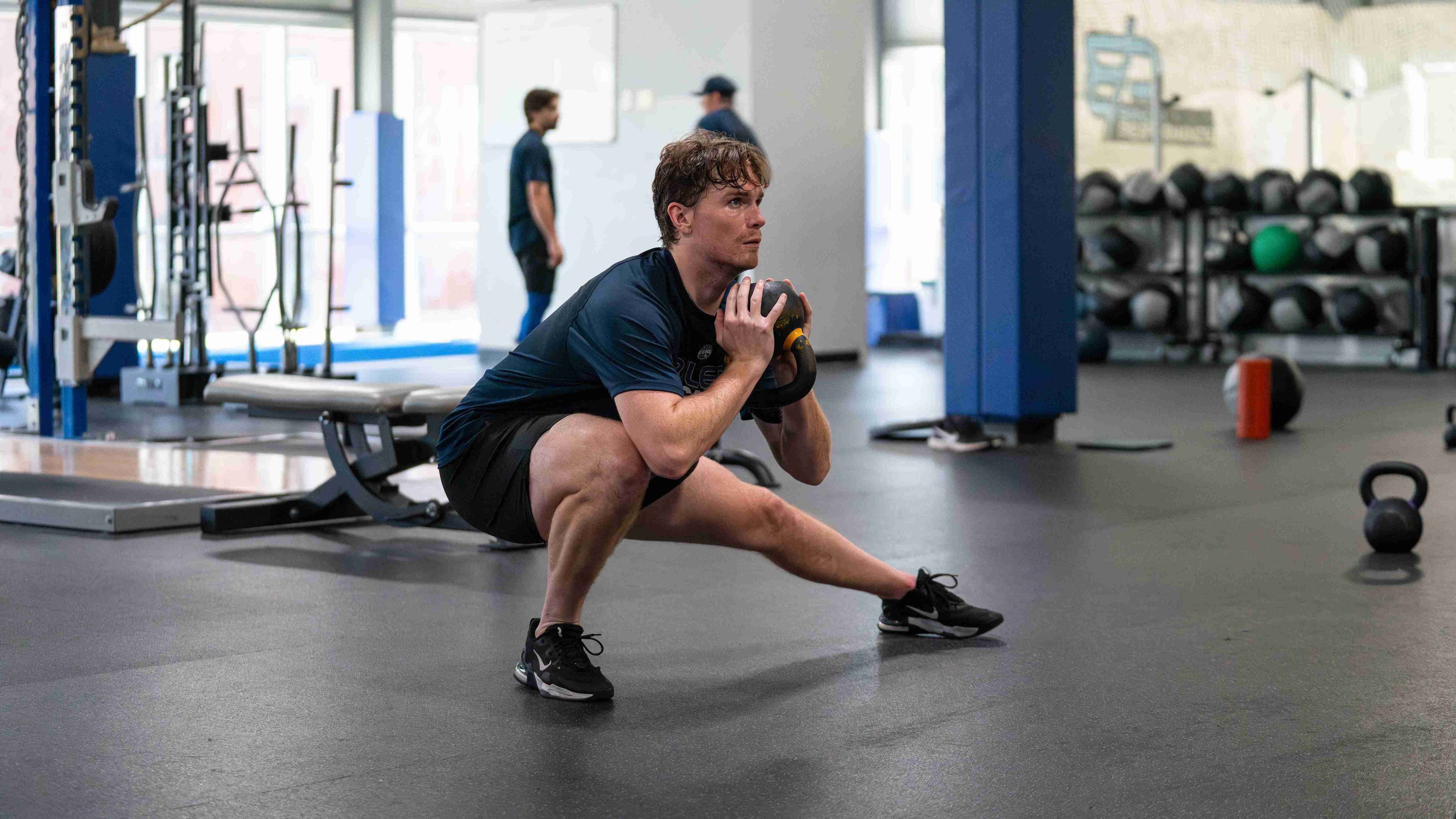
Back squats, front squats, and especially split squats develop the leg drive and single-leg stability that sprint mechanics require. Split squats deserve specific attention for their unilateral demand, which more closely mirrors the actual movement pattern of sprinting than bilateral squat variations.
Hip thrusts and glute bridges.
These exercises isolate hip extension in a way that deadlifts and squats do not, and the movement pattern closely mirrors the propulsive phase of sprinting. Athletes who are strong in conventional hip hinge movements but have not trained hip thrusts often find that adding them produces noticeable carry-over to acceleration.
Nordic hamstring curls.
Nordic curls develop eccentric hamstring strength more effectively than almost any other exercise and have been associated with both improved sprint performance and meaningfully reduced hamstring injury rates. They are uncomfortable to do correctly and underused in most training programs, which makes them a relatively high-value addition for athletes willing to include them.
Plyometrics.
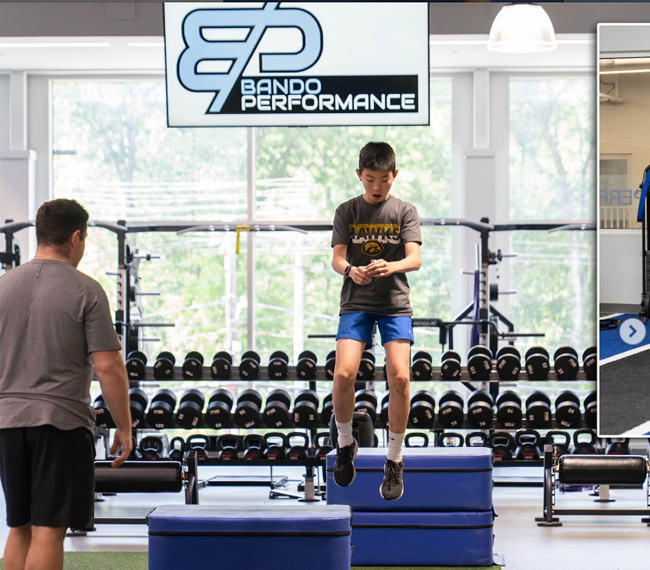
Box jumps, broad jumps, bounding, and similar plyometric exercises bridge the gap between maximal strength and sprint-specific power expression. The ability to produce force rapidly, rather than just absolutely, is what makes strength transfer to speed. Plyometrics develop that rate of force development quality in a way that traditional lifting alone does not.
Why Strength Training Alone Is Not Enough

The case for lifting as a foundation for sprint speed is strong. But it comes with an important qualification: strength training is a foundation, not a complete speed development program.
Rate of force development, the ability to produce force rapidly rather than just maximally, does not automatically improve as absolute strength increases. An athlete who becomes significantly stronger over an off-season but does no sprint-specific work may not be noticeably faster on the field because the neural patterns and mechanical efficiency specific to sprinting have not been trained.
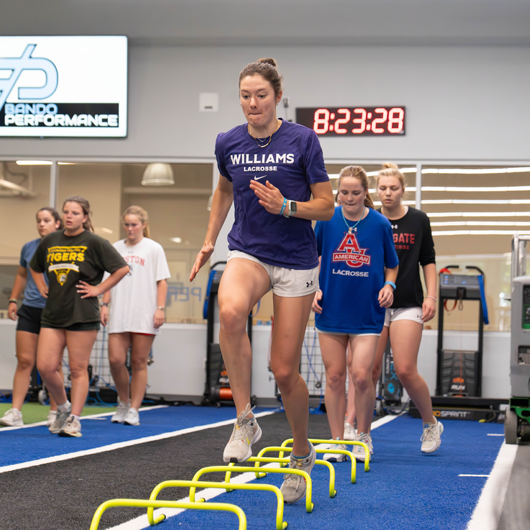
Sprint mechanics, acceleration technique, and maximum velocity development all require specific training that takes place on the track or field, not in the weight room. Plyometrics and sprint drills are the bridge between the strength base and the speed expression. Strength training and speed training work best when they are programmed together deliberately, with each supporting the other rather than being treated as competing priorities.
Sport-Specific Applications
The relationship between strength and speed plays out differently depending on which sport an athlete plays and what kind of speed is most relevant to their position.
Soccer and Lacrosse
Field sport athletes rarely sprint in a straight line for more than 20 to 30 meters before decelerating and changing direction. Acceleration over short distances and the ability to repeat explosive efforts across a full match are the relevant speed qualities. Hip strength and single-leg stability are particularly valuable for these athletes, as is eccentric strength for the deceleration demands of cutting and change of direction.
Football
The speed demands in football vary dramatically by position, but the common thread is first-step explosion and contact force absorption. Linemen benefit from the raw force production of heavy compound lifting. Skill position players benefit from the acceleration and change-of-direction work that single-leg strength and plyometric training support. For most football athletes, the weight room is already a central part of training culture, which makes the strength-speed connection more intuitive here than in other sports.
Basketball
Basketball speed is largely lateral and vertical, with brief acceleration bursts in a confined space. Single-leg strength for cutting and driving, reactive power for jumping, and the endurance to maintain explosiveness through a full game are the relevant qualities. Strength training that emphasizes unilateral work and plyometric development transfers well to the specific physical demands of basketball.
Baseball
Straight-line sprint speed matters for baserunning and outfield coverage, but rotational power is the speed quality most specific to baseball performance. The kinetic chain from the ground through the hips, trunk, and into the arm or bat depends on exactly the same force production foundations that improve sprint speed: hip strength, core stability, and the ability to apply force explosively through a single leg.
How to Structure Strength and Speed Training Together
The order and arrangement of training within a session and across the week determines how well the two qualities develop together. A few practical principles govern this.
Speed work belongs at the beginning of any session where both qualities are being trained. True sprint training requires a fresh nervous system. An athlete who lifts first and then attempts sprint work is producing slower, less coordinated movement and reinforcing a degraded movement pattern rather than a high-quality one. Speed first, always.
Within the week, strength training sessions can follow speed work on the same day or be scheduled on separate days depending on total training volume and recovery. Separate days are preferable when possible, as they allow each quality to be trained with full physical and neurological resources.
In the off-season, higher strength training volume alongside two dedicated speed sessions per week produces the largest developmental gains. In-season, maintaining two strength sessions per week while integrating speed work with sport practice preserves what was built without adding excessive load to an already demanding schedule.
How Bando Develops Speed Through Strength
At Bando Performance, strength and speed development are treated as complementary disciplines rather than competing ones. Athletes work on force production in the weight room and sprint mechanics on the field as part of the same integrated program, with each phase of training building toward the same performance outcomes.
Because the physical qualities that produce sprint speed transfer across sports, multi-sport athletes in the greater Boston and Metro West area benefit from this approach regardless of which sport they are currently in season for. A stronger, more powerful, more explosively capable athlete is a better athlete in every sport they play.
For athletes and parents trying to understand where speed development actually comes from, the answer is simpler than it might seem. Speed is power applied to the ground. Power comes from strength. Strength is built in the weight room. The connection is direct, and the investment is worth making.