Athletes tend to approach lifting frequency the same way they approach most training questions: if some is good, more must be better. It is an instinct that serves them well in a lot of contexts. Hard work compounds. Consistency matters. Showing up counts for something.
But lifting frequency is one area where that instinct regularly leads athletes astray. For someone whose primary goal is getting stronger in the gym, maximizing training volume makes straightforward sense. For an athlete whose performance on a field, court, or track is the actual objective, the calculation is more complicated. Practice, games, travel, and the cumulative physical demands of a sport season are all part of the total training load. Strength sessions do not exist in a vacuum, and treating them as if they do is one of the most consistent ways athletes undermine their own performance.
The right question is not how many days per week an athlete can lift. It is how many days per week an athlete can lift, recover from, and still perform at a high level in their sport. That answer looks different in October than it does in June, different for a freshman than a senior, and different for a single-sport athlete than one playing three sports across twelve months. What follows is a practical framework for working through that question rather than defaulting to a number that may or may not fit.
The Short Answer
For most athletes, two to four strength sessions per week is the appropriate range, with the specific number depending on the time of year and the demands of their sport. Off-season training generally supports three to four sessions weekly, when the focus is building strength and the physical load from sport practice is low. In-season, that drops to two sessions per week, with the goal shifting from development to maintenance. Youth athletes and those new to structured lifting typically do well with two to three sessions per week regardless of season, with an emphasis on quality of movement over volume of work.
Those numbers are useful starting points, not universal prescriptions. The context behind them is what makes them actionable.
Why Frequency Alone Is the Wrong Question
Counting training days is a reasonable proxy for training volume, but it is an imprecise one. Two sessions per week can represent very different amounts of actual work depending on how those sessions are designed, and four sessions of poor quality rarely outperform two sessions of high quality. What matters is whether the training stimulus is appropriate, whether recovery is sufficient between sessions, and whether the cumulative load across all training activities, including sport practice, is something the athlete can absorb and adapt to.
Adaptation happens during recovery, not during the session itself. A strength training session is a stress applied to the body. The body responds to that stress by rebuilding stronger, but only when given adequate time and resources to do so. An athlete who lifts four days per week while practicing five and sleeping six hours a night is accumulating fatigue faster than they are recovering from it. Their performance will eventually reflect that.
Total training load is the variable that actually governs how much lifting an athlete can productively handle. Sport practice, conditioning work, games, and travel all contribute to that load. Strength programming that does not account for those inputs is guesswork.
Off-Season Lifting Frequency
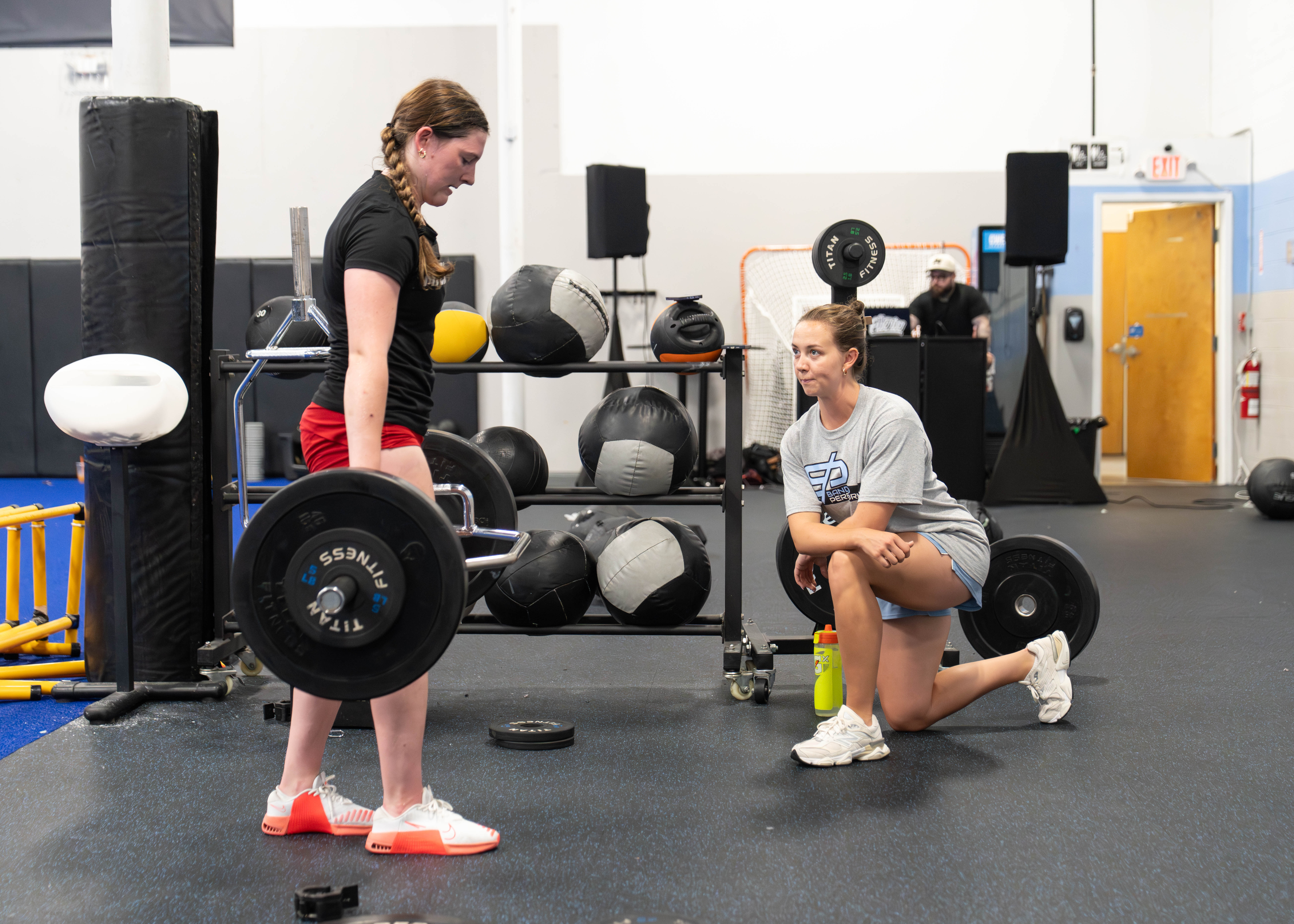
The off-season is the primary window for building strength, and athletes who treat it as such tend to arrive at the following season in a meaningfully different physical state than those who coast. When sport practice volume is low and competition is not imminent, the body can handle more lifting and recover from it effectively. Three to four sessions per week during a genuine off-season is appropriate for most high school and adult athletes, providing enough stimulus and volume to make real strength gains over the course of a few months.
Session design during the off-season can tolerate higher volume and more training variety, including heavier compound movements, accessory work, and targeted development of weaknesses identified during the previous season. This is the time to address imbalances, build power, and lay the physical foundation that in-season maintenance will preserve.
Even in the off-season, consecutive days of heavy lower body training rarely produce better results than alternating with upper body or recovery-focused work. The muscles need time between sessions to complete the adaptation process. Three well-spaced sessions will almost always outperform four sessions crammed into five days.
In-Season Lifting Frequency
In-season strength training is one of the most consistently neglected areas of athletic development, and the cost is real. Athletes who stop lifting entirely when their season begins typically lose a meaningful portion of the strength they built in the off-season before the season is over. The physical demands of competition alone are not sufficient to maintain the specific adaptations that structured strength training produces.
Two sessions per week is the broadly supported standard for maintaining strength during an active season. The sessions themselves change in character: volume comes down, but intensity, meaning the load relative to the athlete’s maximum, stays relatively high. The goal is to provide enough stimulus to signal the body to hold onto its strength without creating enough fatigue to compromise game-day performance.
Timing matters here. Heavy strength sessions in the 48 hours before competition tend to produce residual soreness and neuromuscular fatigue that show up on the field. The best practice is to schedule lifting sessions in the early part of the week when the next competition is at the end of it, giving the body time to absorb and recover before performance is required.
The Multi-Sport Athlete
Athletes who play multiple sports across the year face a scheduling reality that most generic training advice does not account for. When fall soccer flows into winter basketball and spring lacrosse, there is no traditional off-season window where training load drops enough for three or four weekly lifting sessions to be practical or appropriate. Asking a multi-sport athlete to maintain a full off-season lifting program while also practicing five days a week for their current sport is a reliable path to overtraining.
The more realistic approach is to find the seams. The two or three weeks between the end of one season and the beginning of the next are genuine opportunities to briefly increase lifting frequency and intensity before the next competitive block begins. During peak overlap periods, even one quality session per week maintains considerably more than none. The athlete who lifts once a week through a busy stretch is not building much, but they are preserving what they have in a way that zero sessions will not.
Multi-sport athletes benefit from working with a coach who can look at their full annual calendar and build a periodization plan around it rather than applying a standard template that was not designed for their situation.
Lifting Frequency by Athlete Type
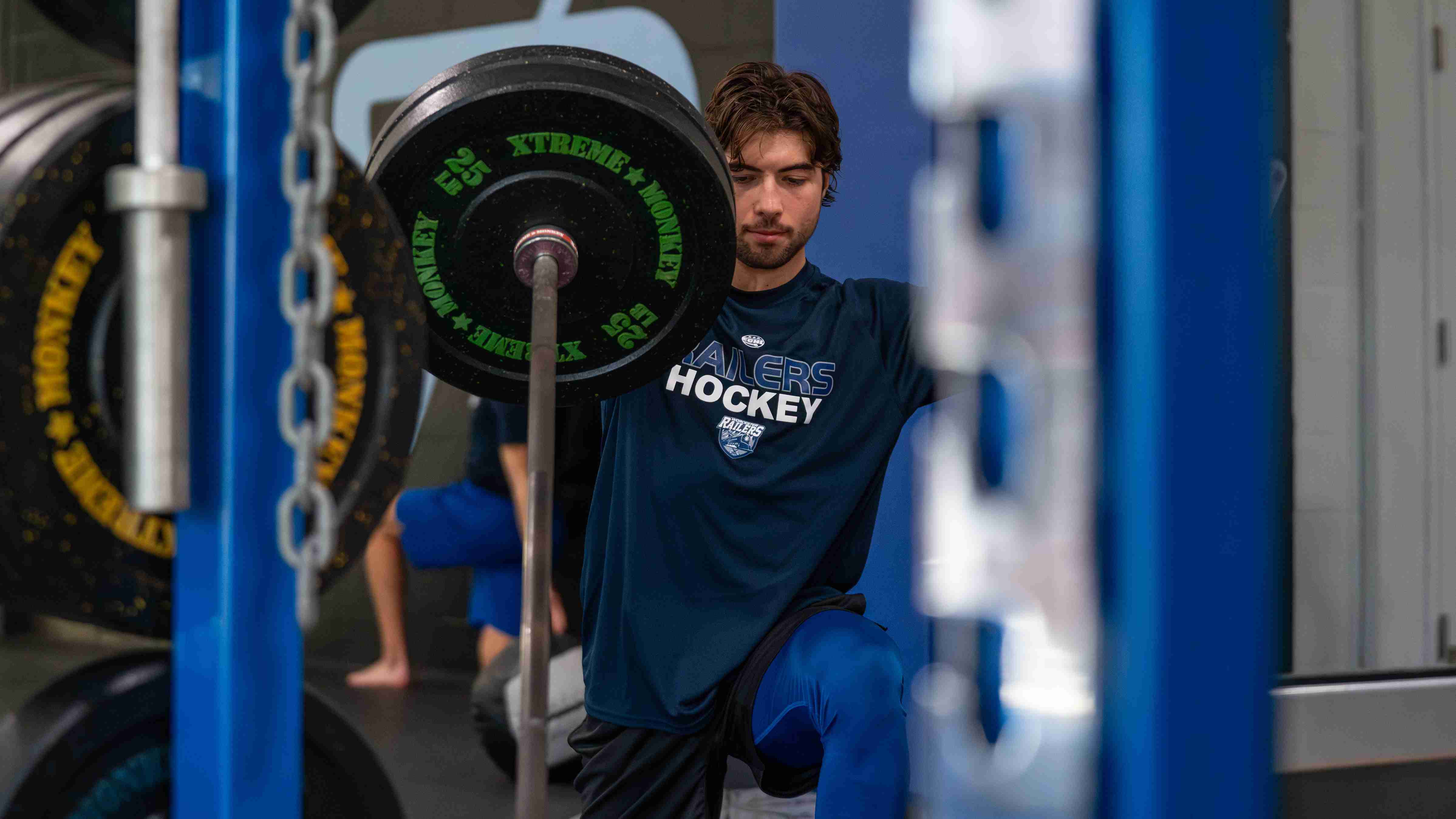
Youth athletes (ages 10–14)
Two to three sessions per week is appropriate, with the emphasis firmly on movement quality and consistency rather than frequency or load. At this age, the neurological adaptations from strength training happen quickly, and the most important investment is in learning to move well. A young athlete who spends a year building solid mechanics at two sessions per week is in a far better position than one who rushes to three or four sessions before the movement foundation is established.
High school athletes (ages 14–18)
Three to four sessions weekly during the off-season and two sessions during the competitive season is the general framework that works well for this group. High school athletes are developing rapidly and can handle more volume than younger athletes, but they are also navigating school, social demands, and potentially multiple sports simultaneously. Sustainability and consistency across the full year matter more than any individual training block.
Adult recreational athletes
Two to three sessions per week alongside other training commitments is a realistic and effective target for most adults. Recovery capacity tends to be the limiting factor as athletes age, and the athletes who manage their total load intelligently tend to stay healthier and continue improving long after those who pushed harder have accumulated injuries that slow them down.
Signs the Frequency Is Off
Lifting frequency that is too high relative to an athlete’s recovery capacity tends to show up in predictable ways: persistent fatigue that does not resolve with normal rest, sport performance that is declining rather than improving through the season, nagging soreness that moves from muscle to muscle without fully clearing, and disrupted sleep. These are not signs to push through. They are signals that the training load and recovery capacity are out of balance.
Lifting frequency that is too low shows up differently: gradual strength loss across a season, movement quality that deteriorates under fatigue, and a recurring pattern of minor injuries that suggest the body no longer has the physical reserve to handle sport demands. Both problems are solvable, but solving them requires actually identifying which one is happening.
Athletes who pay attention to these signals and adjust accordingly tend to train more productively over the long run than those who rigidly follow a frequency prescription regardless of how their body is responding.
How Bando Approaches Lifting Frequency
At Bando Performance, strength programming is built around the athlete’s actual calendar, not a generic template. Off-season and in-season phases are deliberately different in their goals, volume, and structure, and multi-sport athletes receive individualized scheduling guidance that accounts for the full picture of their competitive year rather than a single sport in isolation.
For youth athletes and high school athletes in the Metro West and greater Boston area, Bando’s periodized, athlete-first approach to programming is exactly what separates meaningful development from just going through the motions in the weight room.
FAQs
Can athletes lift weights every day?
Technically possible for some athletes with very well-managed programming, but rarely optimal for those also carrying a full sport training load. The same muscle groups need 48 to 72 hours to recover and adapt between high-intensity sessions. Daily lifting without careful programming tends to produce accumulated fatigue rather than accumulated strength, particularly for athletes whose sport demands are already significant.
Is two days a week enough to build strength?
Two sessions per week is genuinely effective for maintaining strength and producing modest gains, particularly for athletes in-season or those new to lifting. Significant strength development generally benefits from three or more sessions weekly when recovery supports it. Two well-designed sessions are meaningfully better than three or four poorly managed ones.
Should athletes lift before or after practice?
When the goal is strength development, lifting before practice is generally preferable because the athlete is fresh enough to train at the intensity required to stimulate real adaptation. Lifting after practice, while sometimes the only logistical option, typically means the athlete is already fatigued and the quality of the strength session suffers. If lifting must follow practice, keeping the session shorter and focusing on lower-intensity work preserves more of the benefit.
How long should a strength training session be for athletes?
Forty-five to seventy-five minutes covers the majority of what most athletes need from a strength session. Sessions significantly longer than that are often padded with low-value work or indicate that rest periods are too long. The goal is a sufficient stimulus, not maximum time in the gym. Quality and focus within a reasonable session length is far more productive than extended sessions that lose intensity as they go.
Final Thoughts
Lifting frequency is ultimately a question about fit: the training load an athlete can absorb, recover from, and translate into better performance on the field. That number changes across the year, across an athletic career, and in response to the competing demands that sport participation places on the body. Getting it right requires paying attention to those variables rather than defaulting to a fixed number that ignores them.
The athletes who develop most consistently over time are rarely the ones who lifted the most. They are the ones who lifted intelligently, recovered deliberately, and adjusted when the signals told them to. If you want help building a strength program structured around your athlete’s actual schedule and goals, Bando Performance is a good place to start that conversation.