Speed is one of the most sought-after athletic qualities in all of sports. It changes matchups, creates separation, turns average plays into big ones, and forces constant pressure on the competition. It is also one of the most commonly undertrained qualities; not because athletes do not want to be faster, but because most speed training is done incorrectly.
The typical approach looks something like this: run some sprints at practice, maybe do a few cone drills, and hope that playing your sport enough eventually improves quickness. For some athletes, natural ability carries that approach far enough. For most, it leaves significant gains on the table.
If you’re wondering how to get faster for sports, there is one key thing to understand: speed is trainable. It is a physical quality that responds to structured, progressive work the same way strength does. Athletes who approach speed development with the same intentionality they bring to strength training see real, measurable improvements. Improvements that show up as a differentiator in competition.
This guide breaks down exactly how to train for speed: what it actually is, what physical qualities it depends on, and how to build a program that produces faster, more explosive athletes on the field or court.
What Speed Actually Is
Before training for speed, it helps to understand what you are actually training. Sport speed is not a single quality. It is a collection of related but distinct physical abilities:
Acceleration
The ability to go from stationary, or a slow pace, to fast as quickly as possible. In most sports, this is the most important speed quality. The majority of sport movements occur over distances of 10 to 30 yards, which means athletes rarely reach top speed. How fast you get there matters more than how fast you go once you arrive.
Maximum Velocity
True top-end speed. Most relevant in soccer, football, and track where athletes cover enough ground to fully accelerate. Developing maximum velocity matters, but it is secondary to acceleration for most athletes.
First-Step Quickness
The ability to react and initiate movement explosively. A basketball player reading a passing lane, a shortstop breaking on contact, a midfielder winning a 50-50 ball; all of these are first-step quickness situations. This quality is as much about the nervous system as the muscles.
Change of Direction
The ability to decelerate, reorient, and re-accelerate in a new direction. This is where sport-specific speed diverges most from straight-line sprinting speed. True agility adds a cognitive layer: reading a situation and making a movement decision under pressure.
A complete speed training program addresses all four of these qualities, with emphasis placed according to the demands of the athlete’s particular sport.
The Physical Foundations of Speed
Speed does not come from nowhere. It is the output of several underlying physical qualities working together. Understanding these is essential to understanding why the training phases below are structured the way they are.
Force Production
At its most fundamental level, speed is about how much force you can apply into the ground, and how quickly you can apply it. Greater force production means greater propulsion per stride. This is why the strongest athletes in a training group are often among the fastest. It is the reason why strength training is a prerequisite for serious speed development.
Strength
You cannot be maximally fast without being strong. The posterior chain—glutes, hamstrings, and lower back—is the engine of sprinting. Weak glutes mean reduced hip extension. Weak hamstrings mean reduced stride length and higher injury risk at top speed. Single-leg strength matters as much as bilateral strength because sprinting is, stride by stride, a single-leg activity.
Mechanics
Proper sprint mechanics allow athletes to direct force efficiently. Poor mechanics waste energy, reduce stride frequency, and limit top speed regardless of how strong an athlete is. The good news is that mechanics are coachable, and improving them often produces immediate speed gains without any change in fitness.
Neuromuscular Efficiency
Speed training teaches the nervous system to recruit muscle fibers faster and in better sequence. This is why speed work must be done at high intensity. Submaximal sprinting trains athletes to be moderately fast, not maximally fast. The nervous system adapts to the way you stimulate it.
Phase 1: Build the Foundation
Most athletes want to skip straight to sprinting. This is understandable. It is also why many athletes plateau early.
Before speed work can be truly effective, the body needs an adequate strength and mobility base. Without it, sprint mechanics break down, force production is limited, and injury risk increases. This phase is not glamorous, but it is what makes everything that follows work.
Strength Priorities
Focus on the muscle groups most responsible for sprinting:
- Hip hinge patterns (deadlift variations, Romanian deadlifts) to develop the posterior chain
- Single-leg strength work (split squats, step-ups, single-leg Romanian deadlifts) to build the strength that transfers directly to each stride
- Glute development (hip thrusts, lateral band work) to improve hip extension power
- Core stability. Not crunches, but anti-rotation and anti-extension work that stabilizes the trunk during high-speed movement
Mobility Priorities
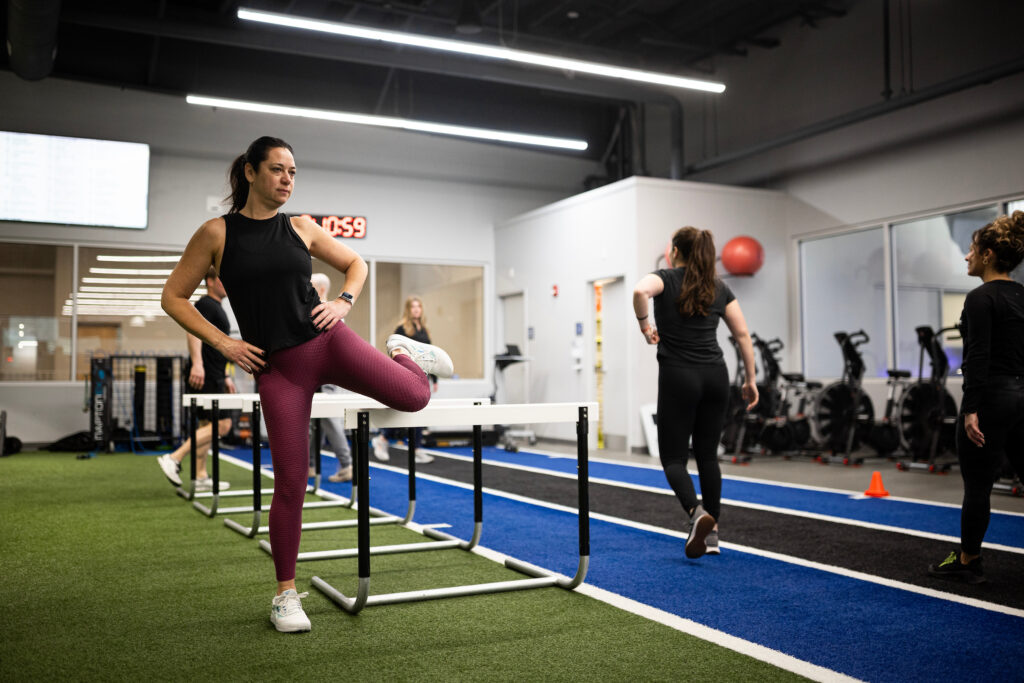
Three areas have the most direct impact on sprint mechanics and speed potential:
- Hip flexor mobility — tight hip flexors limit stride length and force hip extension compensation
- Ankle dorsiflexion — restricted ankles affect ground contact mechanics and force transfer up the chain
- Thoracic rotation — proper arm action during sprinting requires a mobile upper back
Spending 10 minutes per training session on these areas, consistently over weeks, produces meaningful improvements in sprint mechanics.
Duration for this phase: 3 to 6 weeks depending on the athlete’s current strength level and training background. Athletes who are new to structured training should not rush through it.
Phase 2: Develop Acceleration
Acceleration is the highest-return speed quality for athletes in most sports. Improving your ability to go from 0 to full speed in 10 to 20 yards will change your game more than investing in almost any other athletic development.
Acceleration Mechanics
During the acceleration phase of a sprint, the body leans forward—think of pushing against a wall, not running upright. Key technical points:
- Forward lean from the ankles, not the waist
- Powerful, low drive phase; ushing the ground behind you, not pulling yourself forward
- Aggressive arm action that matches leg drive
- Eyes down and forward during the drive phase, not looking up
Acceleration Training Methods
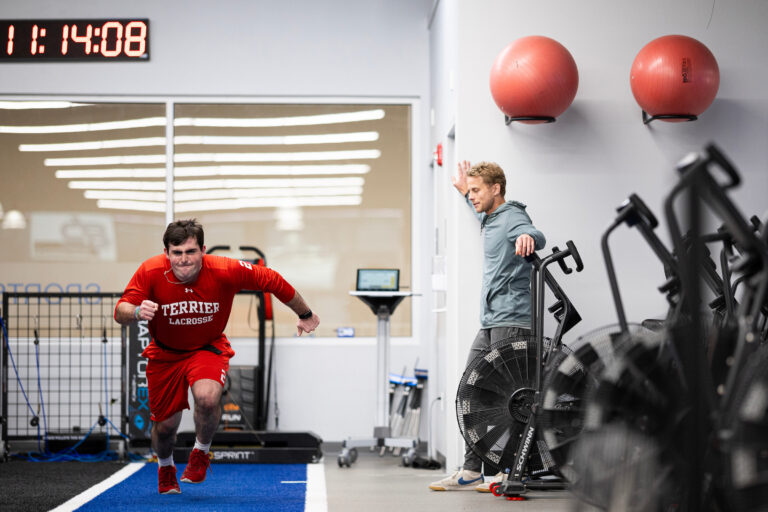
- Short sprint work: 10 to 30 yard efforts from a dead stop, with full recovery between reps (90 seconds to 3 minutes minimum)
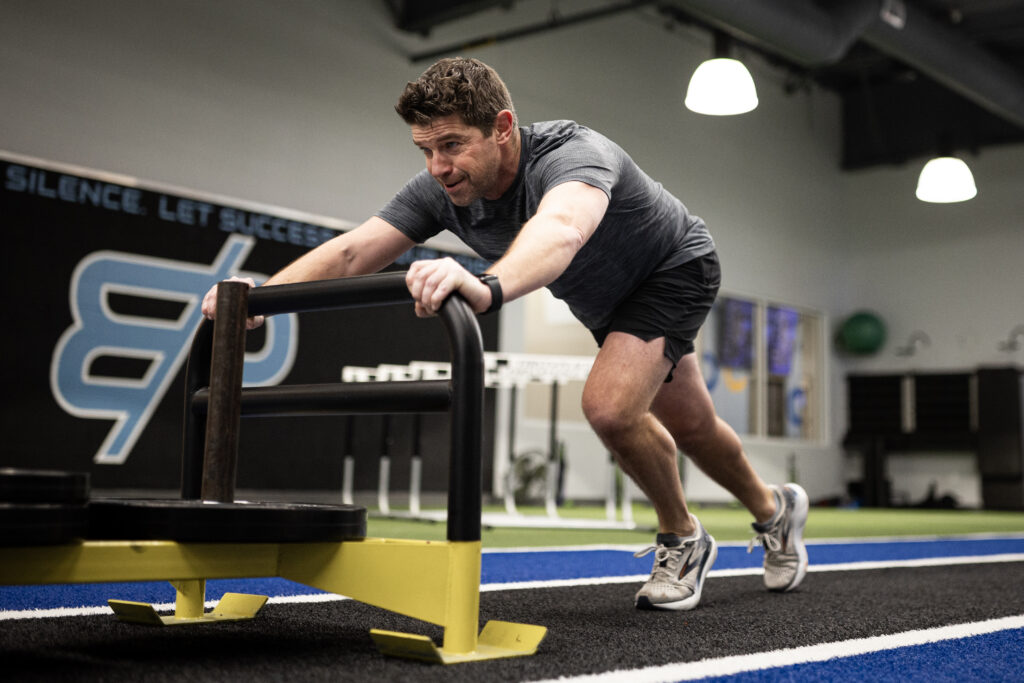
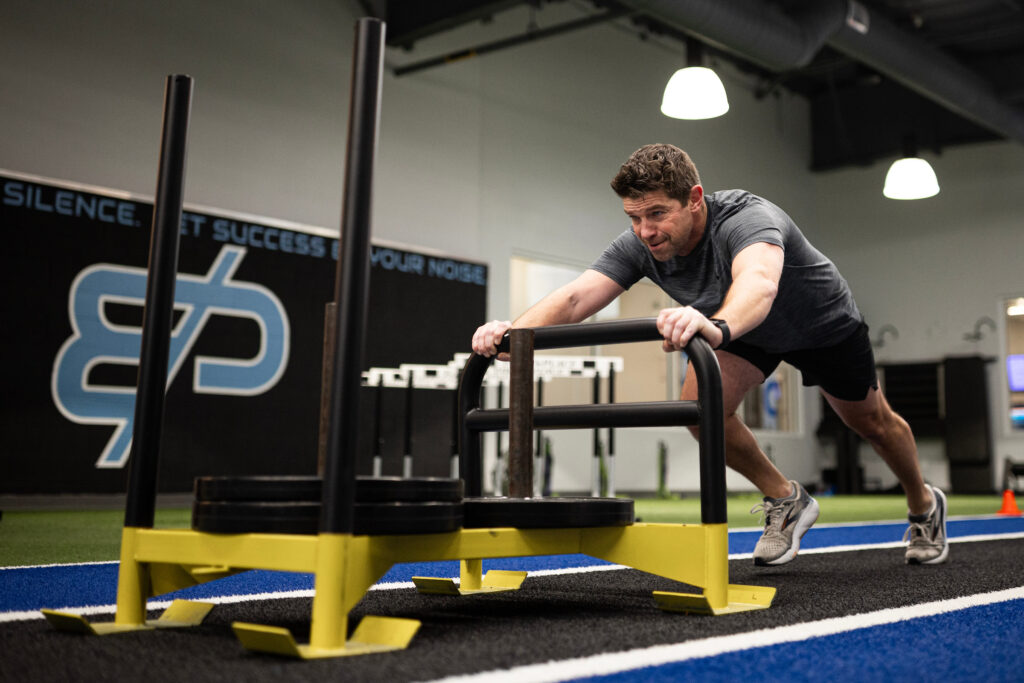
- Resisted sprints: sled pushes or harness sprints that overload the drive phase and reinforce forward lean
- Hill sprints: natural resistance that forces proper acceleration mechanics
- Falling starts and push-up starts: develop reactive first-step explosiveness
A critical note on recovery: speed training is neurologically demanding. Performing sprint reps while fatigued does not train speed. Full recovery between efforts is not optional if improving speed is the overall objective. There is a place for conditioning work targeting metabolic endurance, mental toughness, and sport-specific fatigue training, but that should be separated from speed training.
Phase 3: Build Top-End Speed
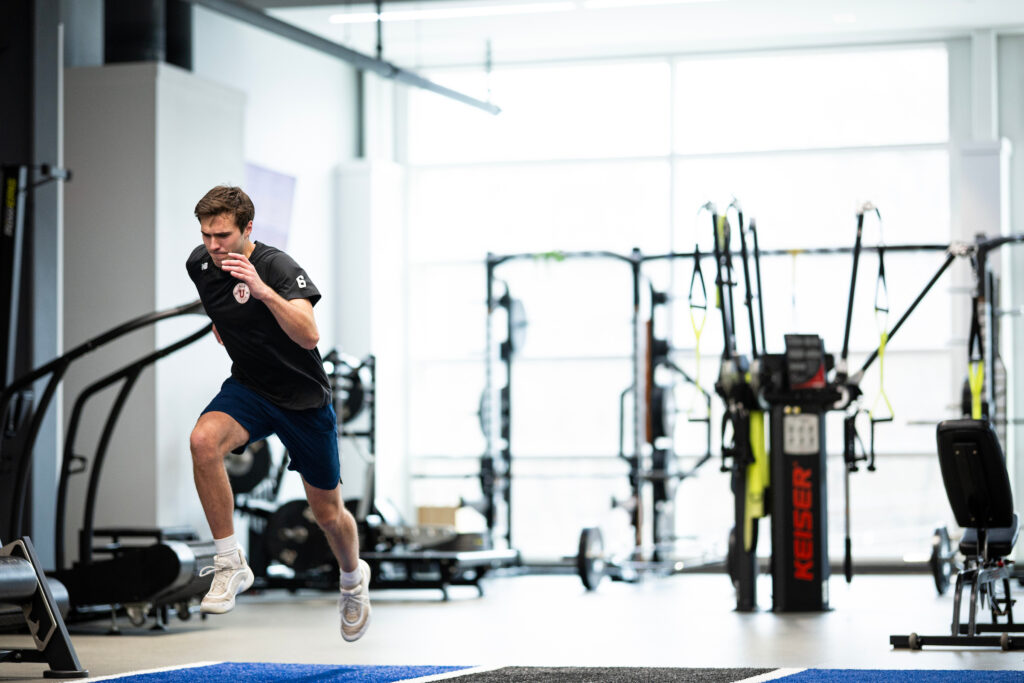
Once acceleration mechanics are solid, developing maximum velocity adds another gear to the athlete’s speed profile. At top speed, the mechanics shift significantly from the acceleration phase.
Maximum Velocity Mechanics
- Upright posture—the forward lean of acceleration is replaced by tall, stacked alignment
- High knee drive with the thigh reaching parallel or above
- Pawing or clawing action as the foot contacts the ground directly under the hips rather than out in front
- Short, powerful ground contact times; top-speed sprinting is about applying force quickly, not pushing longer
Top-End Speed Training Methods
- Flying sprints: short acceleration run-up followed by a 20 to 30 yard effort at maximum velocity
- Wicket runs: low hurdles or cones spaced to lengthen stride and reinforce mechanics
- Hollow sprints: sprint, coast, sprint sequences that teach athletes to maintain mechanics when transitioning in and out of top speed
Not every sport requires maximum velocity development equally. A soccer midfielder covers enormous distances and benefits enormously from top-end speed. A basketball point guard may rarely reach true top speed during a game. Programming should reflect the actual demands of the athlete’s sport.
Phase 4: Sport-Specific Speed
Raw speed in a straight line is only one piece of the puzzle. Most sport situations demand that athletes read, react, and move rather than just run.
First-Step Quickness
First-step quickness is trained through reactive starts: movements triggered by an external stimulus rather than a planned cue. This trains the connection between perception and physical response.
- Partner-reactive drills: mirror drills, tag games, reaction starts on visual cues
- Drop step and crossover step drills for lateral first-step development
- Start from sport-relevant positions: defensive stance, base position, standing ready
Change of Direction and Deceleration
Change of direction speed starts with the ability to decelerate. Athletes who cannot stop quickly cannot change direction quickly. Deceleration is also where many non-contact injuries happen, making it a critical training priority.
- Deceleration drills: sprint to a cone and come to a controlled stop, progressing to sharper angles over time
- Pro agility and 5-10-5 drills for lateral change of direction
- T-drills and L-drills that combine forward, lateral, and backward movement
- Sport-specific patterns: soccer cuts, basketball defensive slides, football route breaks
True agility adds decision-making on top of movement skills. Once an athlete can execute the physical patterns well, introducing reactive and competitive elements makes the training transfer to game situations.
How to Structure a Speed Training Week
Speed training needs to be sequenced carefully within a full training week to be effective. The most common mistake is performing speed work while fatigued from strength training or team practice.
General sequencing principles:
- Speed work before strength training, not after
- Speed and strength should not be programmed on back-to-back days during high-intensity phases
- Allow 48 hours of recovery between max-effort speed sessions
- During the competitive season, reduce volume but maintain intensity; one quality speed session per week is enough to preserve gains
Sample off-season week for a high school athlete:
- Monday: Acceleration work + lower body strength
- Tuesday: Upper body strength + mobility
- Wednesday: Top-end speed or agility + sport-specific skill work
- Thursday: Recovery—light movement, mobility, soft tissue work
- Friday: Strength (full body or lower emphasis) + reactive agility
- Saturday: Sport-specific skill work or rest
- Sunday: Rest
This is a framework, not a prescription. Volume, intensity, and exercise selection should be adjusted based on age, training history, sport schedule, and current phase of training.
The Mistakes That Keep Athletes Slow
Even motivated athletes often train in ways that limit their speed development. These are the most common errors:
Training speed when tired.
Sprinting while fatigued trains exactly that—moving fast while tired. It does not develop maximum speed. Quality of effort is far more important than quantity of reps. If mechanics are breaking down and effort is dropping, the session is done.
Skipping strength work.
Athletes who only sprint, without ever building the posterior chain strength that powers sprinting, hit a ceiling early. Strength is the physical prerequisite for speed. There is no shortcut around it.
Ignoring mechanics.
Poor sprint mechanics are a speed limiter that no amount of fitness can overcome. An athlete running with excessive forward lean at the waist, heel striking, or crossing over at the midline is wasting force on every stride. Mechanics work often produces faster results than any conditioning change.
Insufficient recovery between reps.
Rest periods in speed training are not optional. The nervous system needs time to recover between max-effort reps. Thirty seconds between sprints is a conditioning drill. Two to three minutes between sprints is speed training. These are different adaptations.
Relying on skills practice alone.
Skill practice develops sport skills. It does not systematically develop speed. Athletes who rely exclusively on practice for their physical development are leaving significant athletic potential untapped.
How Bando Approaches Speed Development
At Bando Performance gyms in Wellesley and the Metro West area, speed development is not treated as a bolt-on to a general fitness program. It is a specific, assessed, and progressively structured process.
Every athlete begins with a movement assessment that identifies mechanical inefficiencies, mobility restrictions, and strength imbalances before any speed programming is built. An athlete with poor hip mobility and weak glutes needs a different starting point than an athlete who is mechanically clean but lacks top-end velocity. Generic speed programs ignore that distinction. Individualized ones do not.
Because Bando integrates physical therapy and performance training, athletes who are managing an injury or returning from one do not have to choose between staying healthy and developing their speed. The two tracks work in parallel rather than in sequence.
Our multi-sport focus means the speed work we build reflects the actual demands of each athlete’s sport—not a one-size-fits-all template. A lacrosse midfielder, a football cornerback, and a basketball guard all need to be fast, but they need to be fast in very different ways.
For athletes in the greater Boston and Metro West area who are serious about developing their speed the right way, Bando is built for exactly that.
FAQs on How to Get Faster for Sports
At what age can athletes start speed training?
Basic speed and movement skills can and should be introduced early. Foundational running mechanics, coordination, and reactivity training are appropriate for athletes as young as 8 or 9. Structured, high-intensity speed work with resisted sprinting and formal programming is generally appropriate from around age 12 to 13, depending on the individual’s development and readiness. Earlier introduction to quality movement sets the foundation for everything that follows.
How long does it take to get faster?
With structured, consistent training, most athletes begin to see measurable speed improvements within 6 to 10 weeks. Early gains often come from improved mechanics and neuromuscular efficiency before significant strength changes occur. Longer-term speed development—meaningful changes in maximum velocity and sustained acceleration—typically requires several months of progressive work. Speed development is a long-term project, not a quick fix.
Does strength training really make you faster?
Yes, but with an important qualifier: Strength training that targets the posterior chain, develops single-leg power, and improves force production capacity directly supports speed. General fitness or bodybuilding-style training has a less direct relationship. The type of strength training matters. Posterior chain strength, hip extension power, and single-leg stability are the qualities most directly tied to sprint performance.
Can you improve speed in-season?
You can maintain and modestly improve speed in-season, but the primary goal during the competitive season should be maintaining what was built in the off-season while managing fatigue. One quality speed session per week is typically enough to hold onto gains. Major speed development is best pursued during the off-season when volume can be higher and fatigue from competition is lower.
What’s the difference between speed and agility?
Speed is the ability to move fast in a given direction. Agility combines speed with the ability to change direction rapidly and react to external cues. Both are trainable, and both matter in athletics, but they require different training methods. Pure speed work (sprints, acceleration runs) does not develop agility, and agility work alone does not maximize straight-line speed. A complete program develops both.